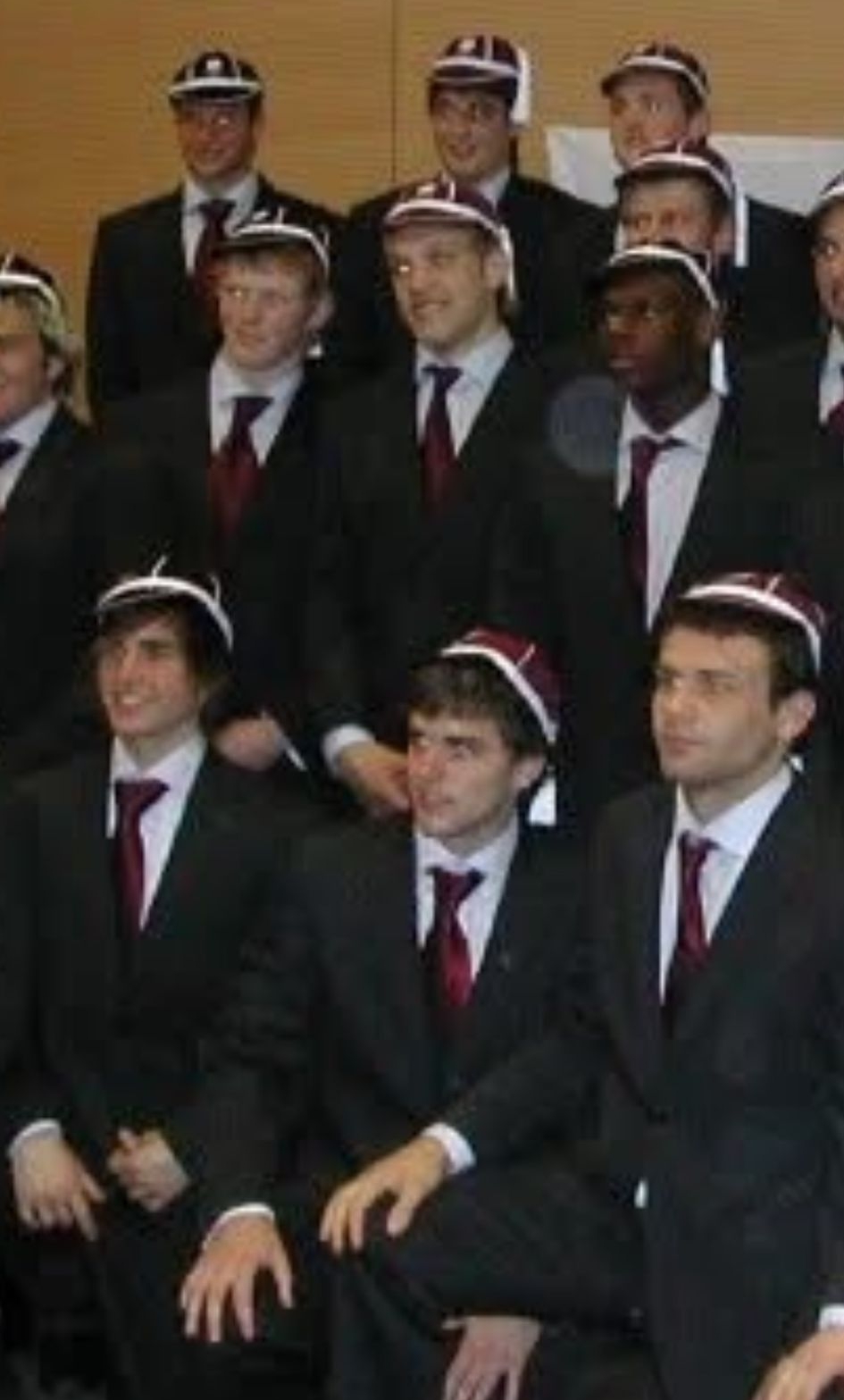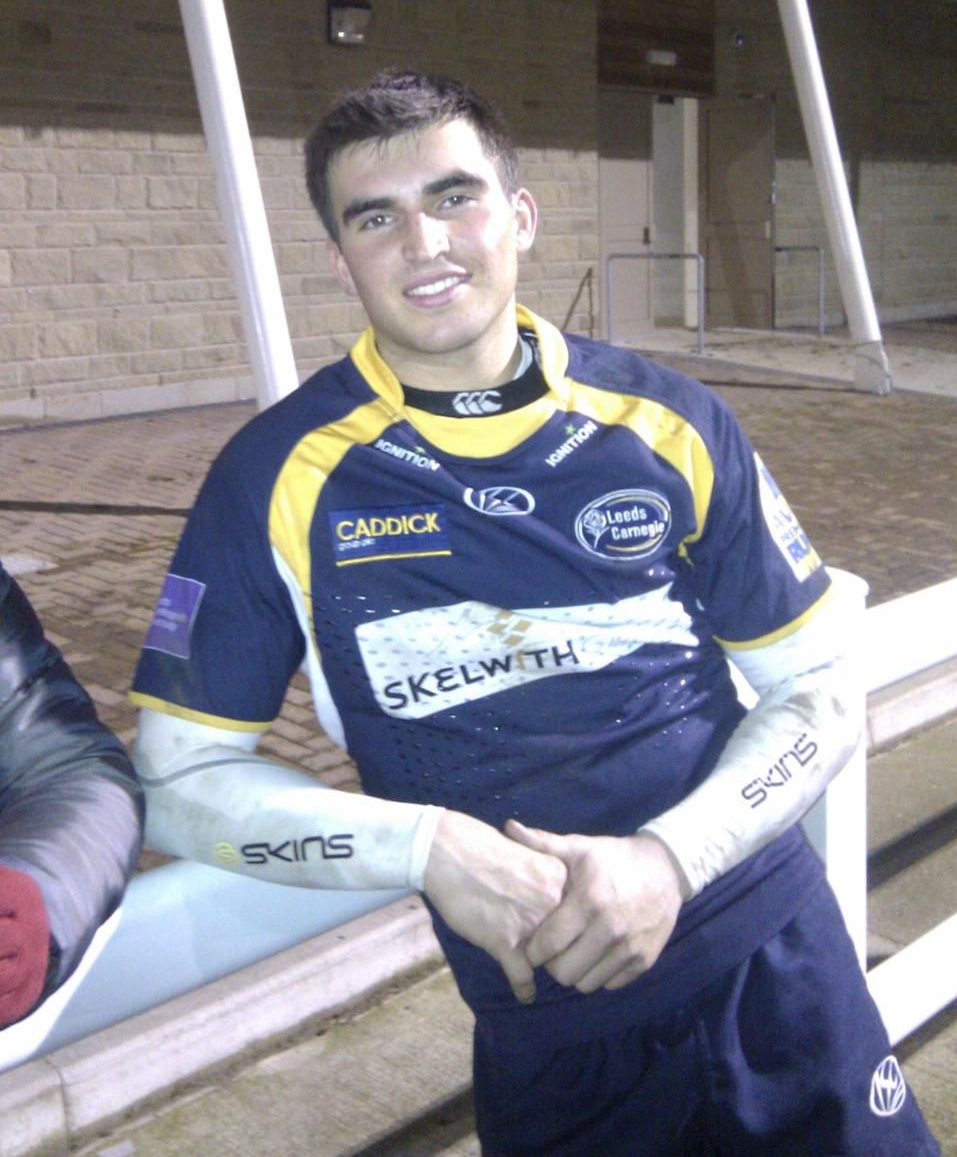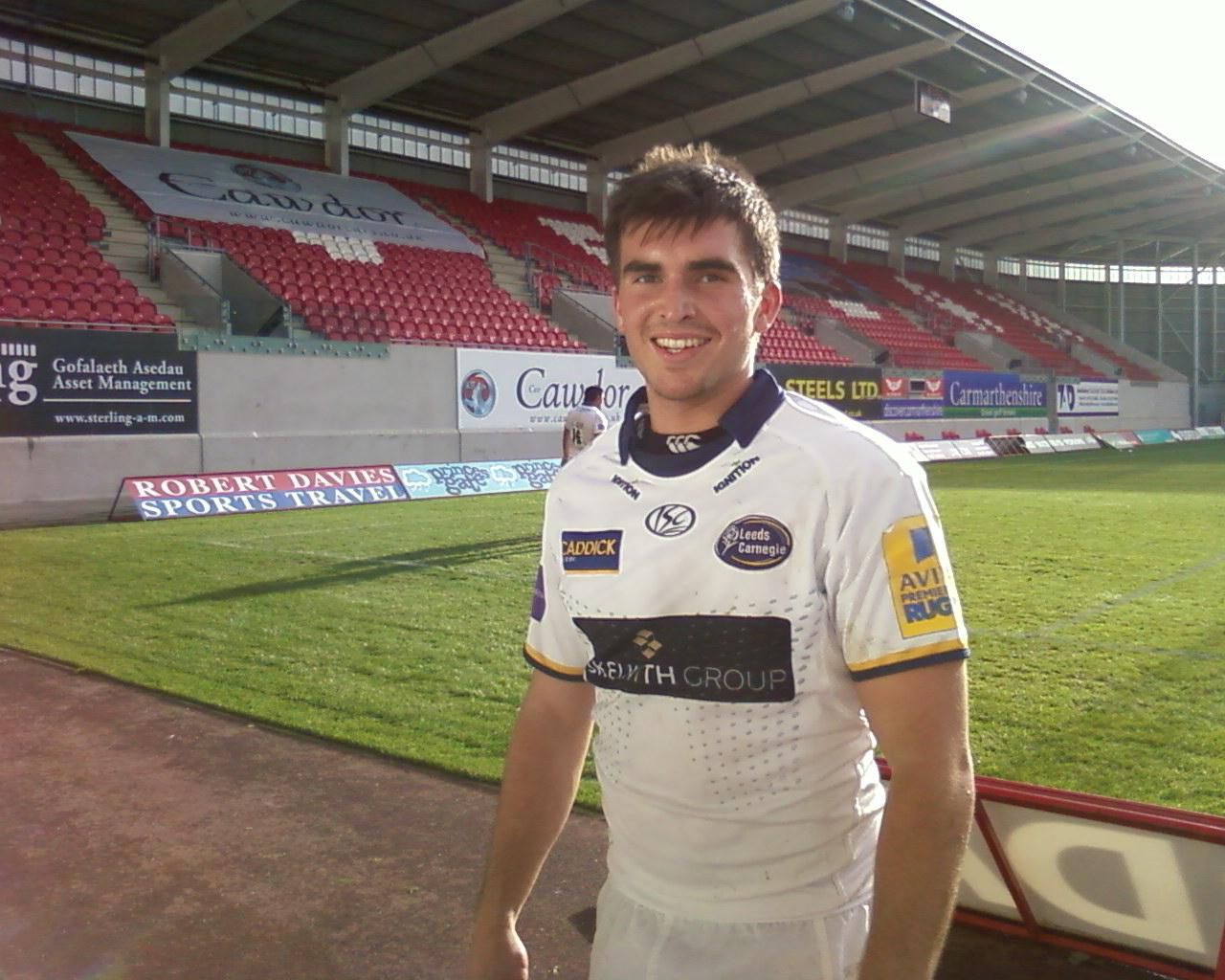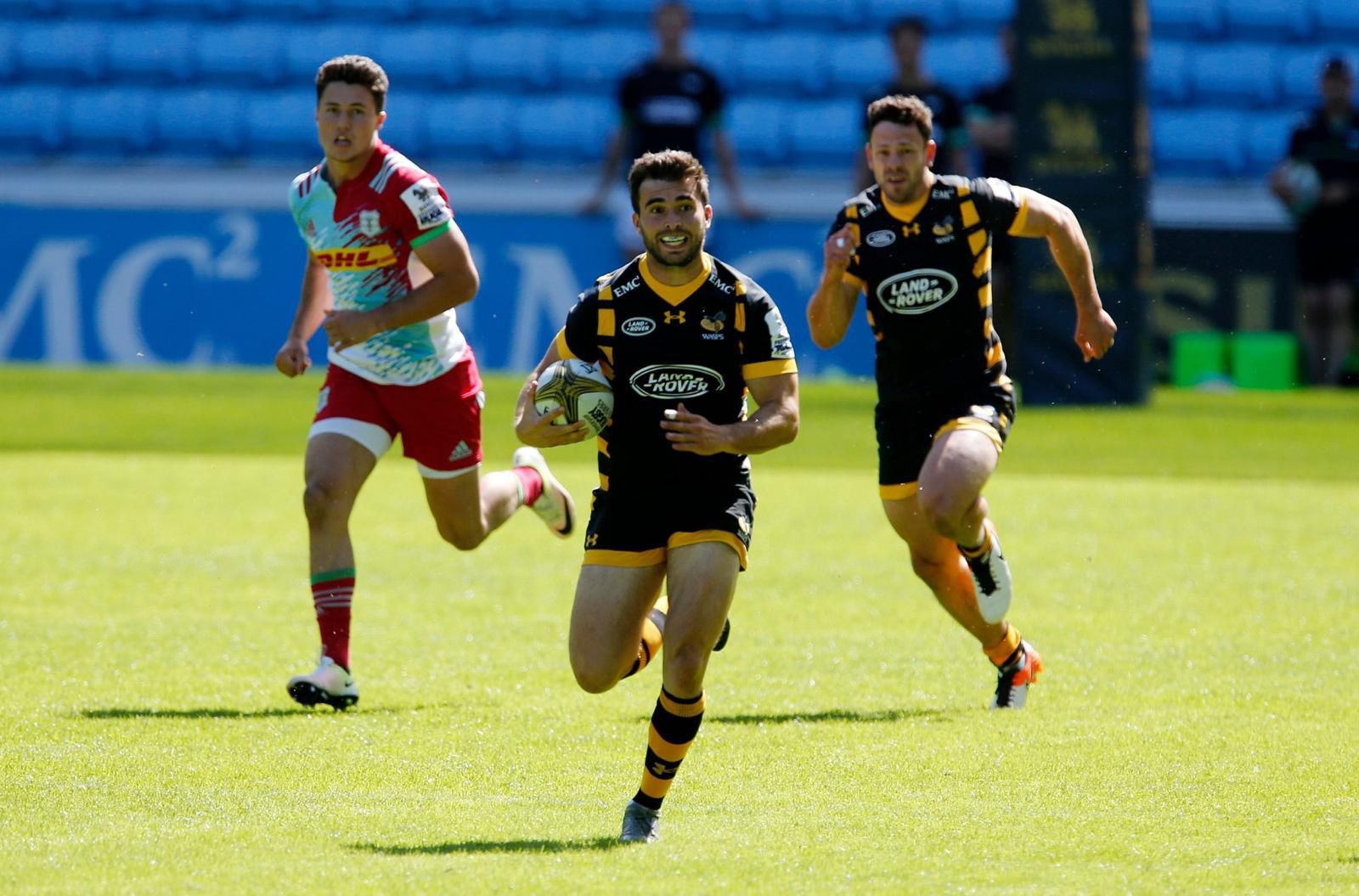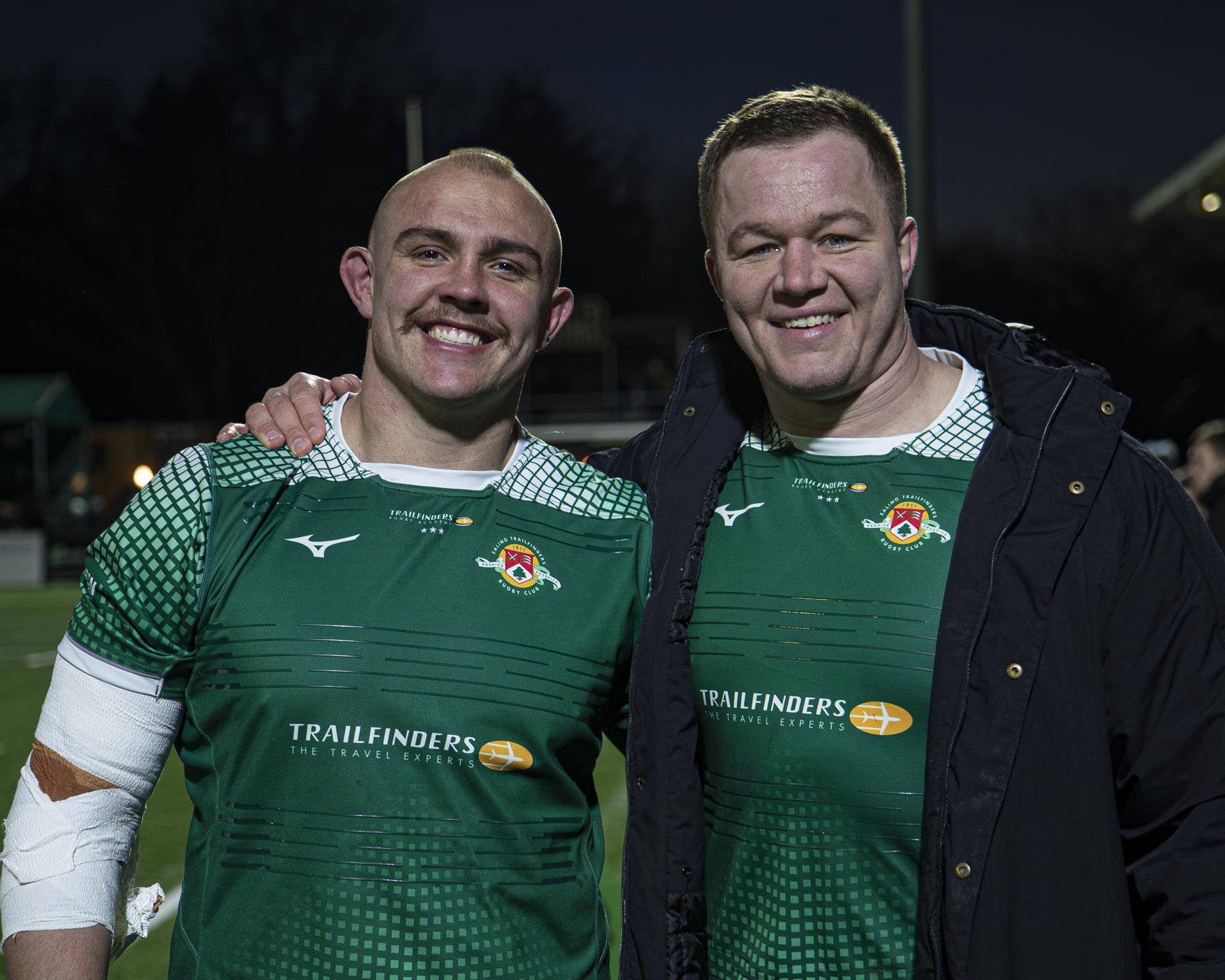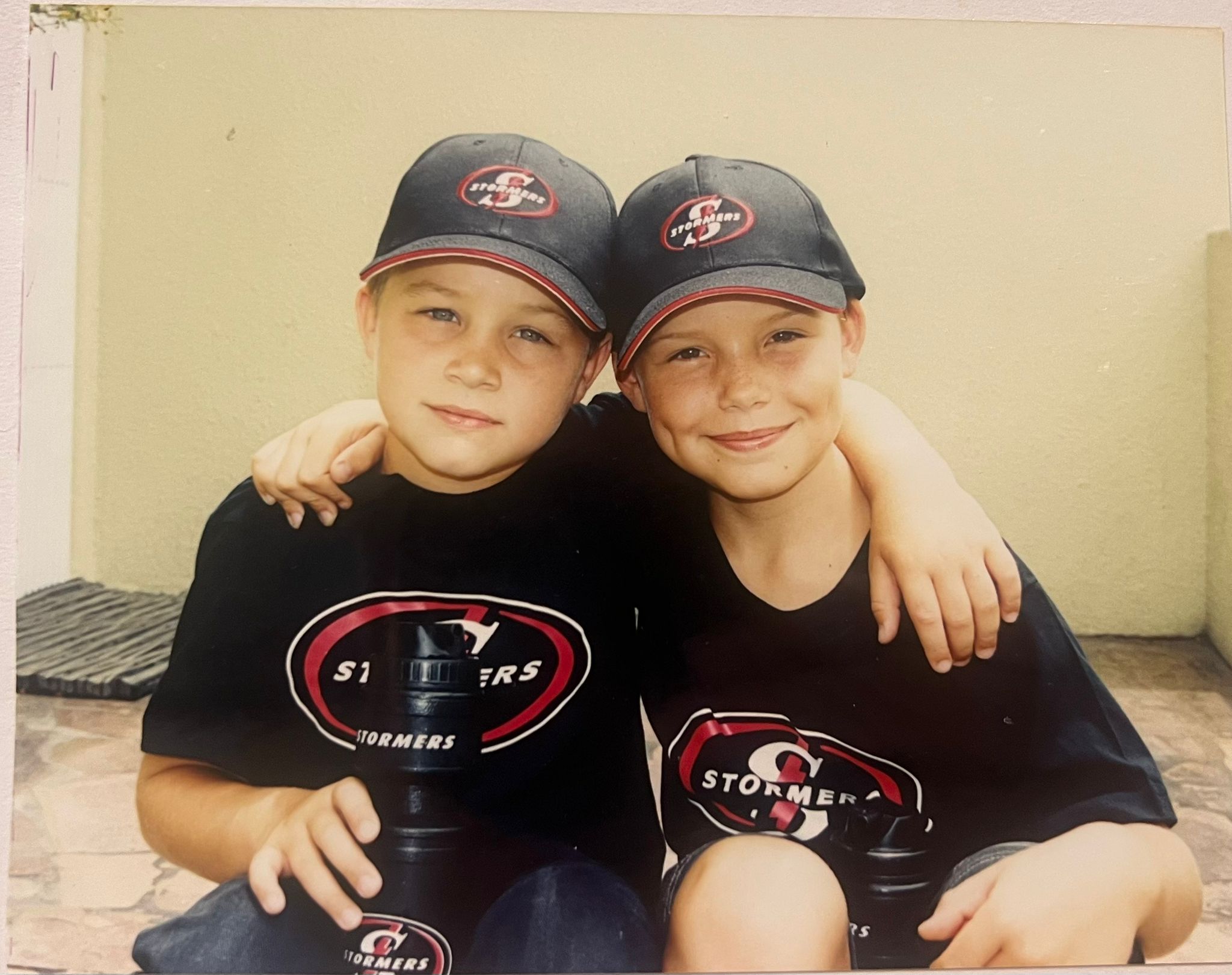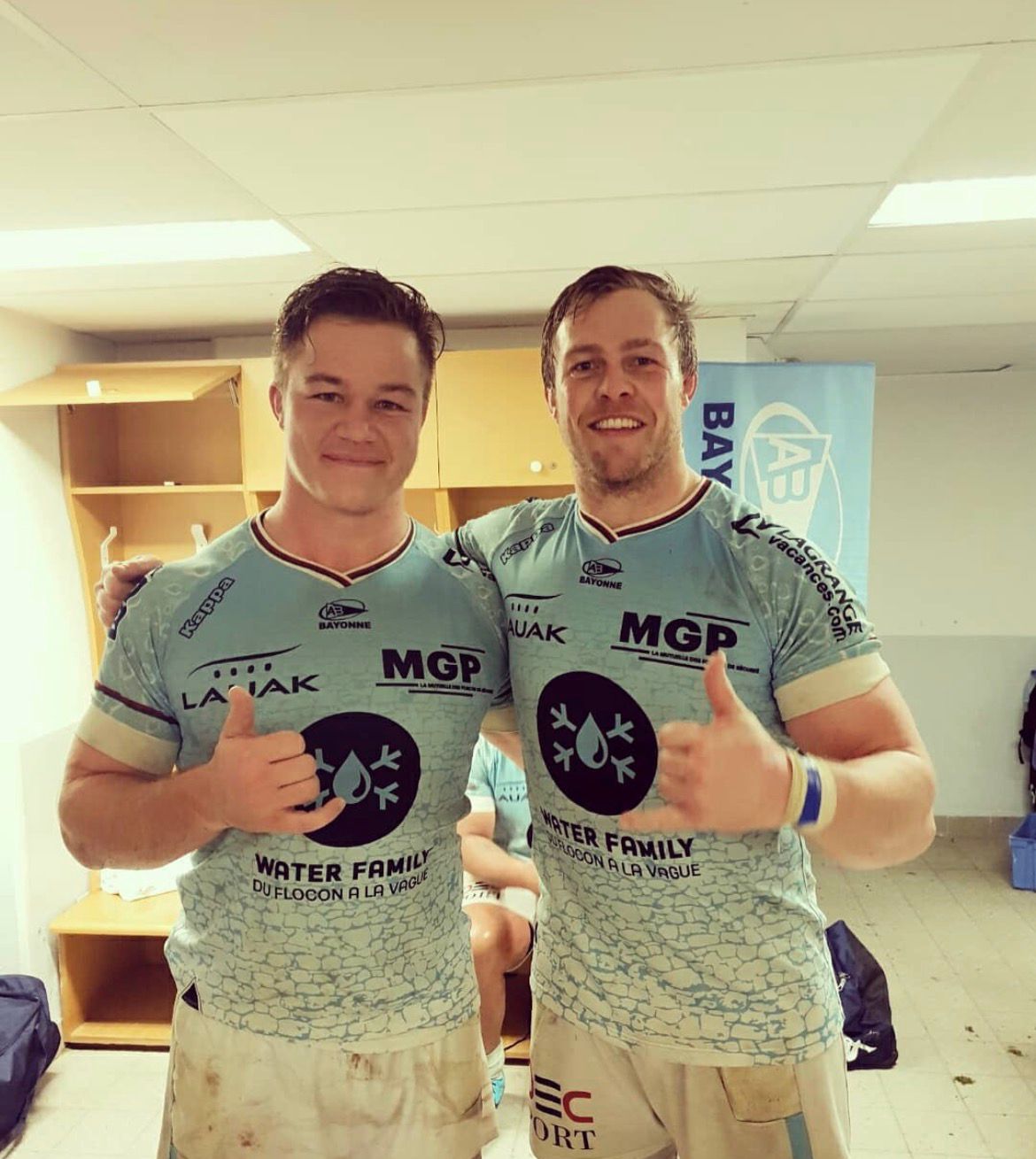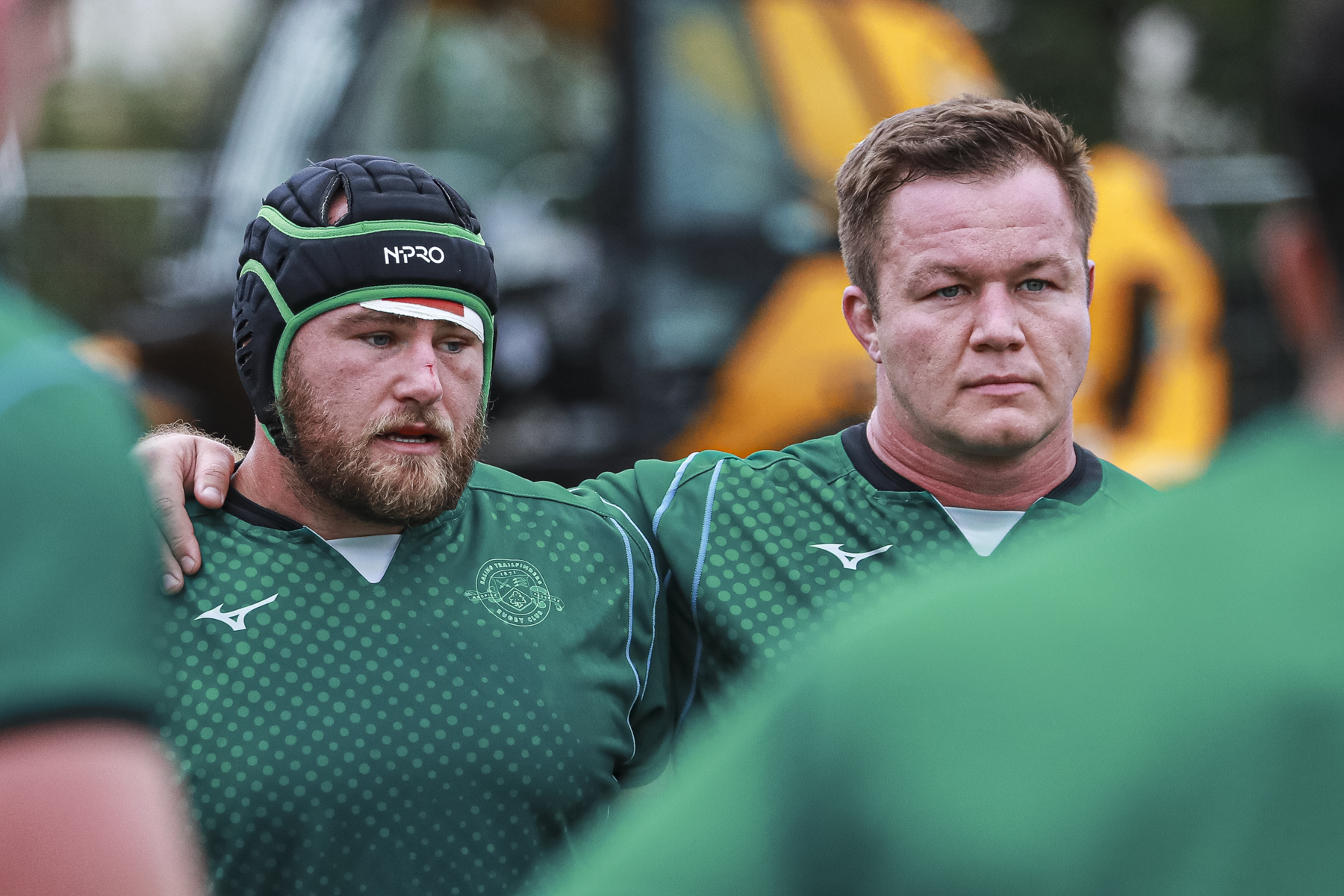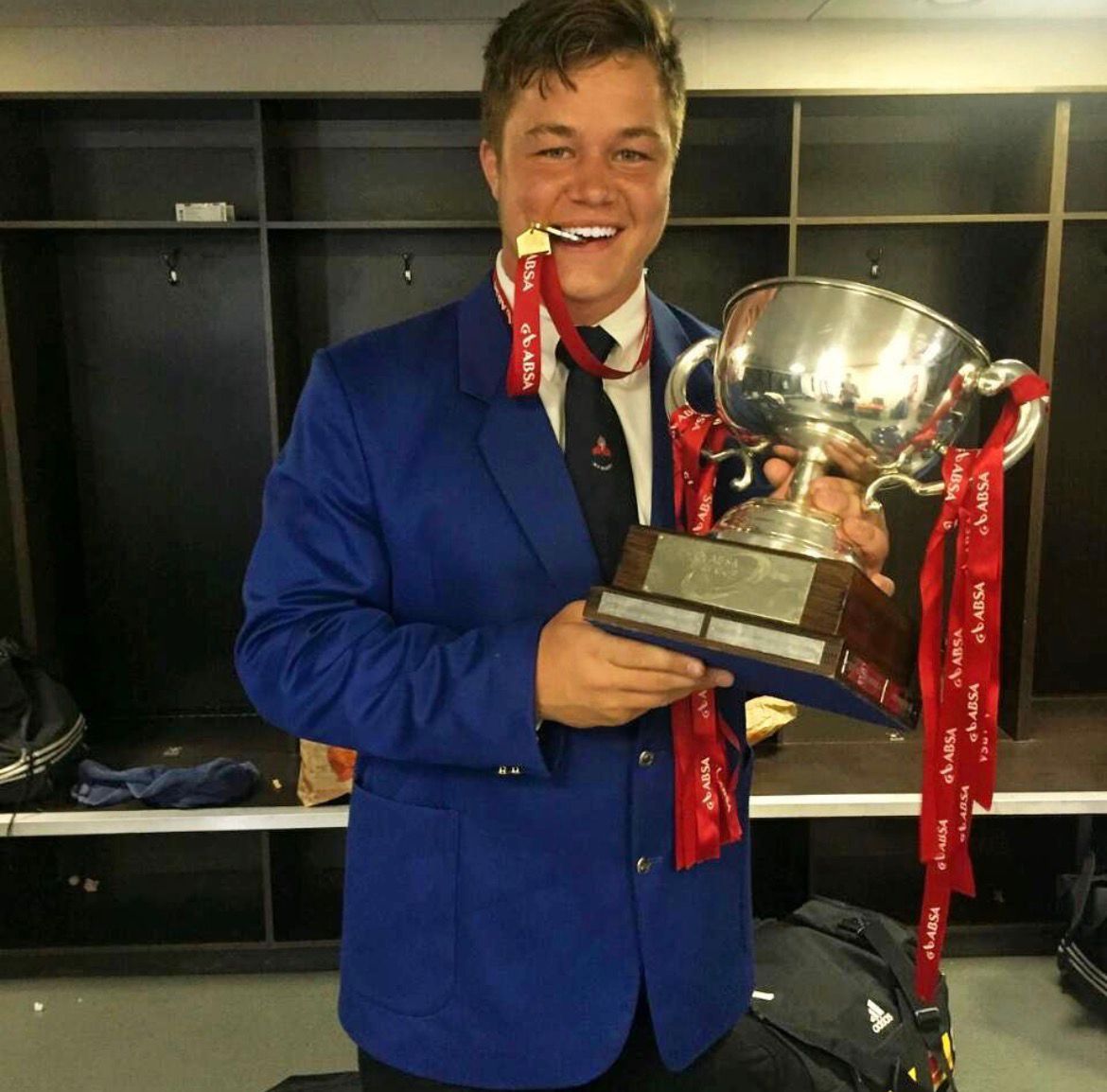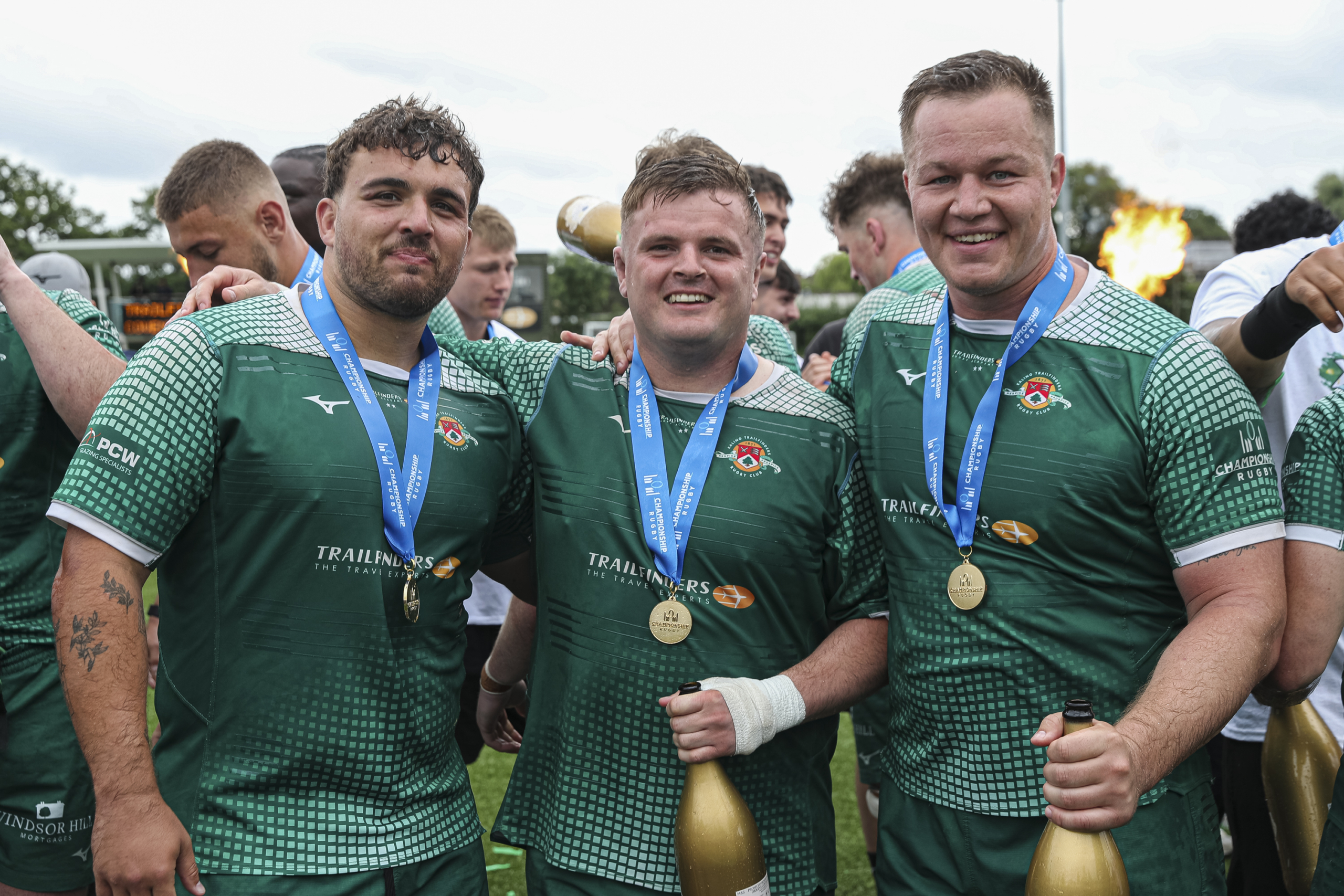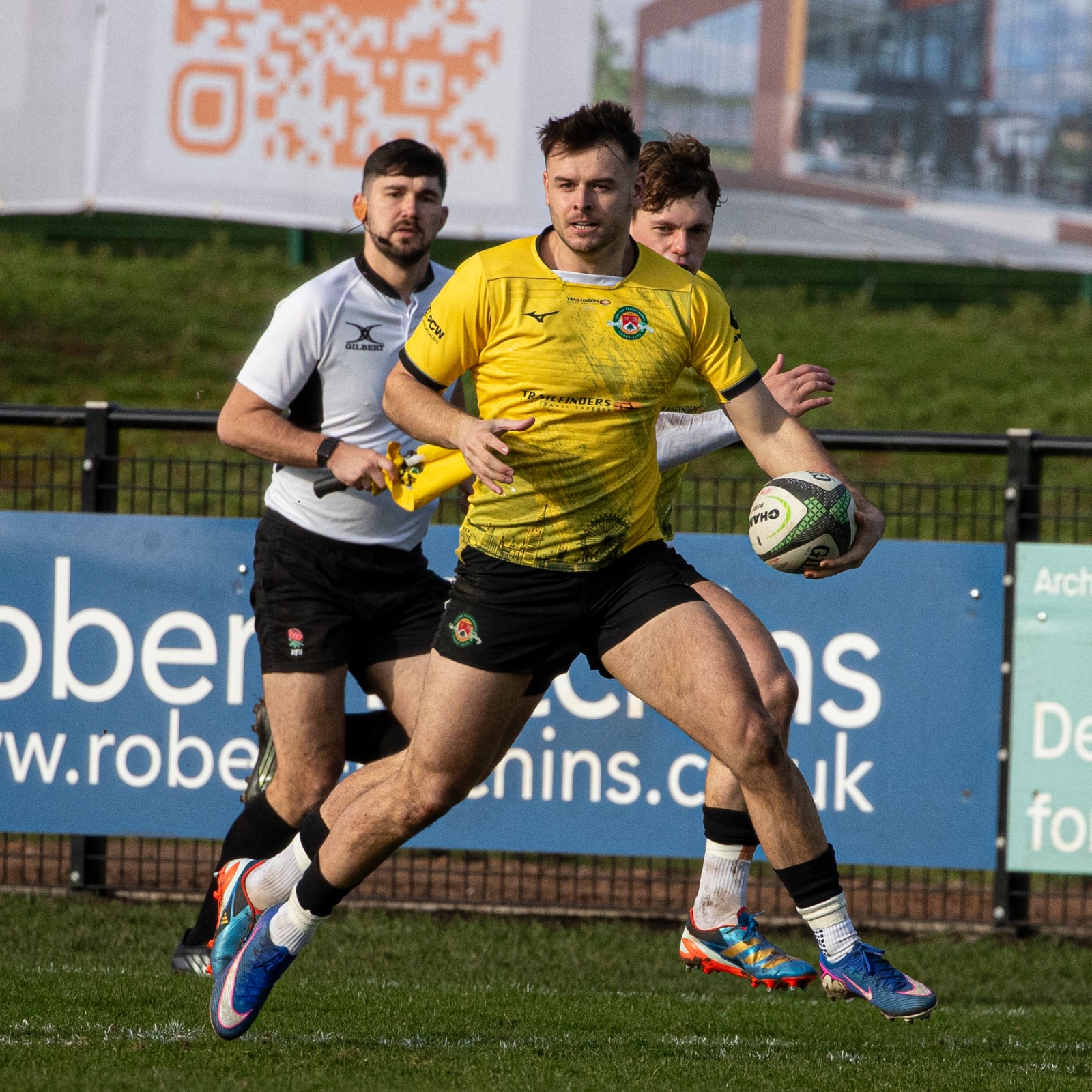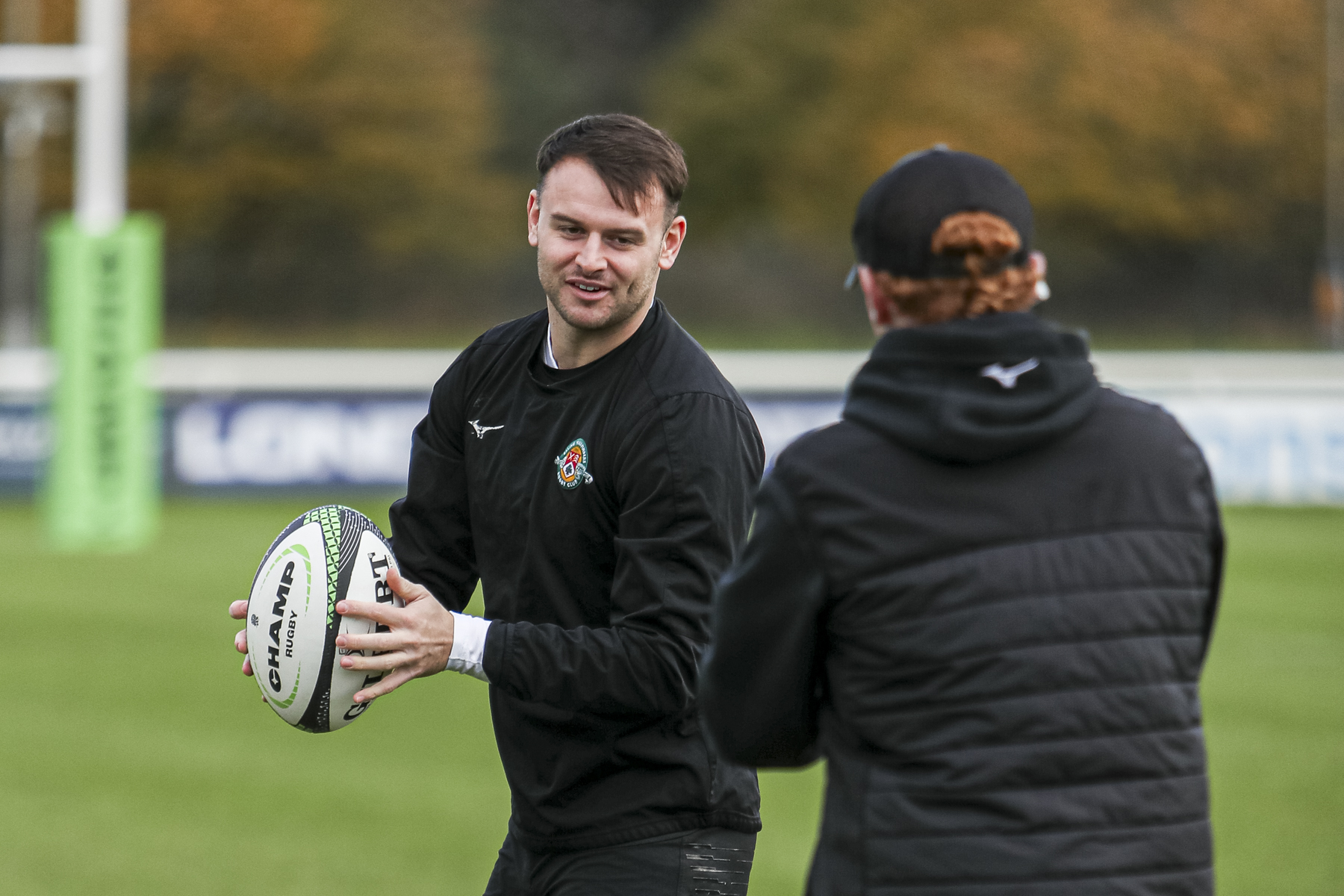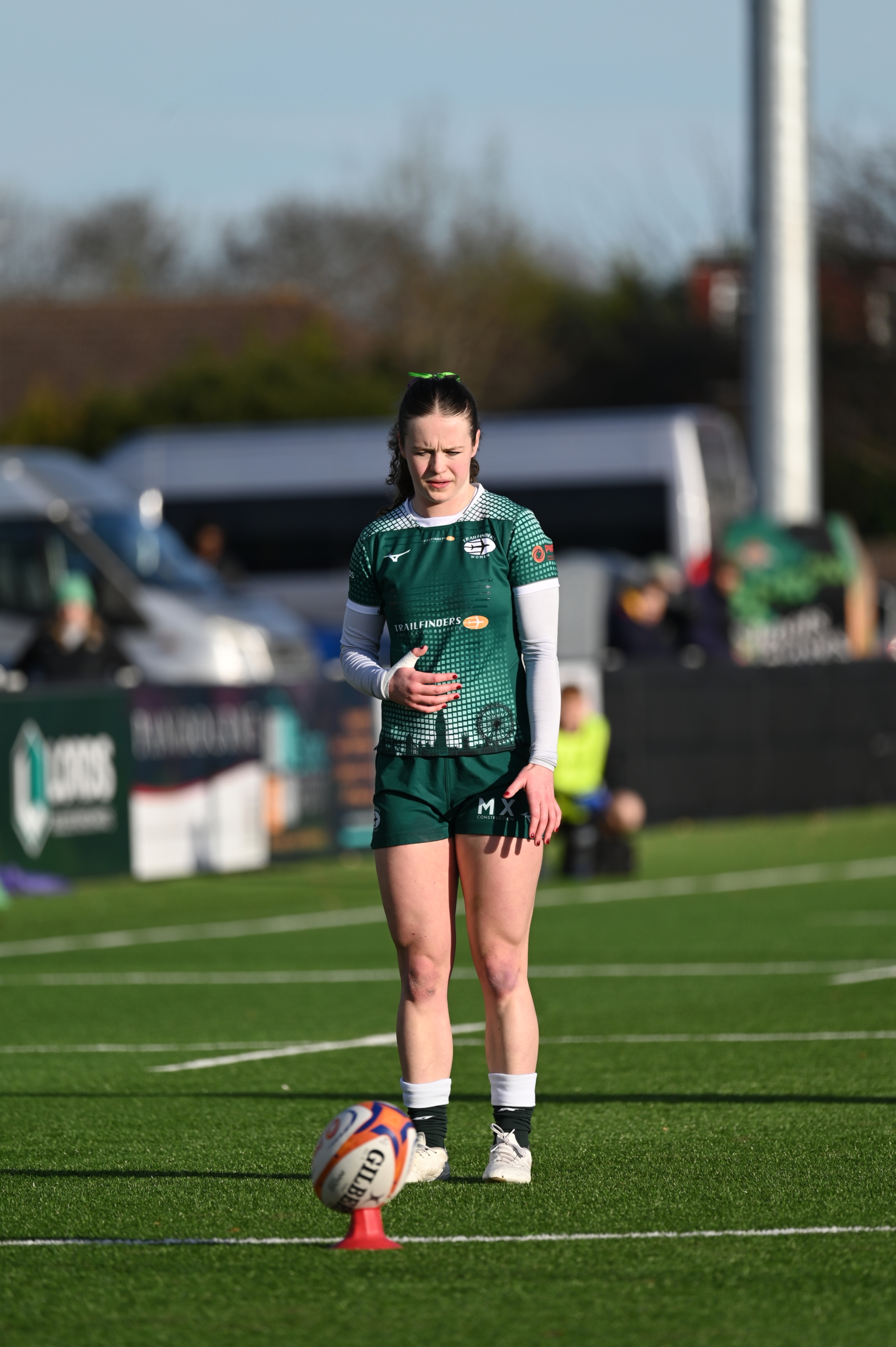

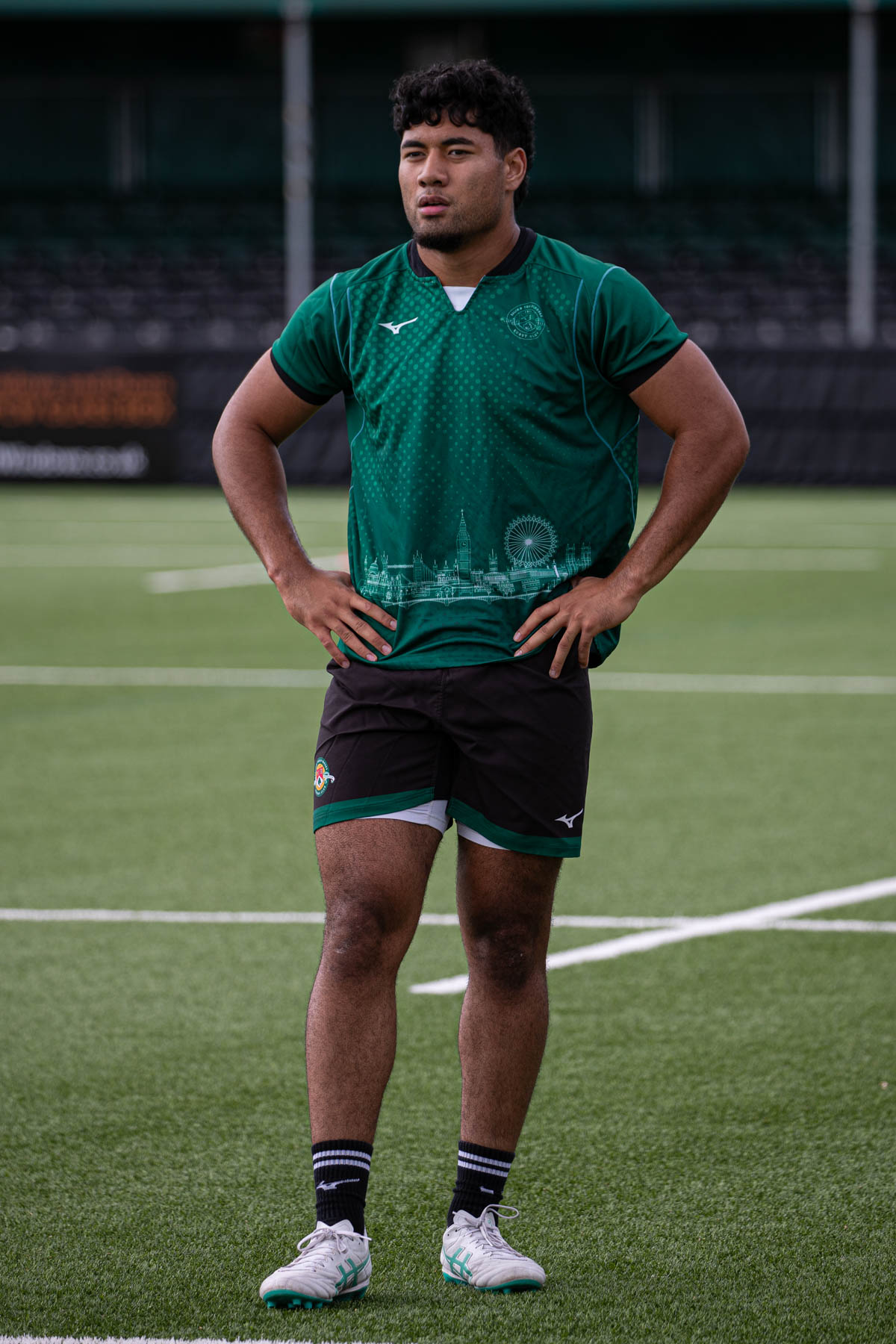
Back rower TJ Fanolua has spent his life across England and France. He’s part of the Trailfinders pathway and the strategic partnership between the Club and Brunel University. 

As the son of ex-professional centre for Samoa and Gloucester Rugby Terry Fanolua, it might have seemed like destiny for TJ to follow in his father’s footsteps. 

Fanolua is currently a business management student at Brunel University, the partner institution in the Trailfinders performance pathway.

Whilst still at the beginning of his career, the back rower has faced adversity in the form of injury. But overcoming that challenge ignited his ambitions for success.

This is TJ Fanolua’s Trail So Far. 
The enticement of rugby 

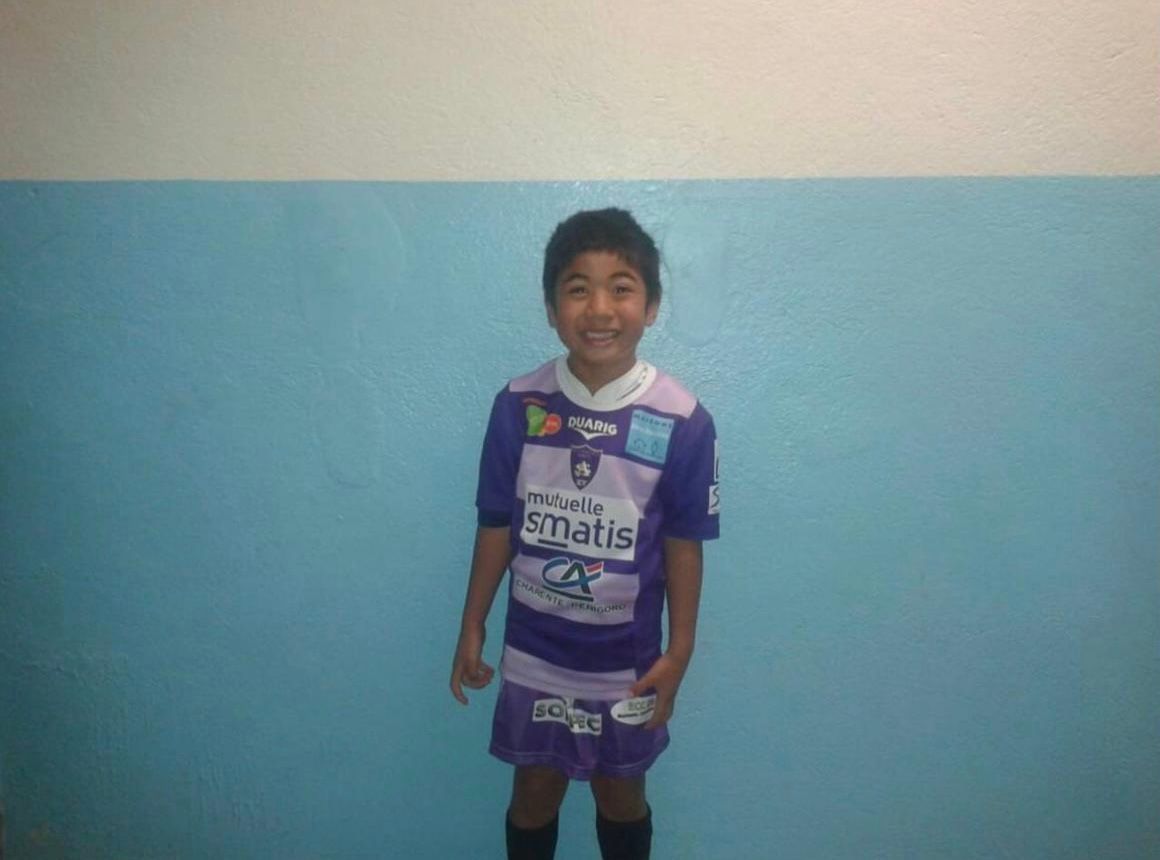
Fanolua was born in England but lived in France as a child. His family moved across the Channel in line with Terry Fanolua’s professional rugby career. 

Of course the family connection to the sport was in part one of the reasons why TJ picked up rugby. Yet, there was another reason that enticed a young TJ to the sport. 

‘I got into it because I wanted the kit, boots and all that sort of stuff,’ he admitted. 

‘My dad got me some of those things. I remember my first game. I was actually really scared of contact. I kept hiding behind all the other players. 

‘I just really liked the kit and early doors that was one of the things that kept me in the game.

‘But my dad is one of the main reasons for getting me into rugby. We moved to France in line with his move to SAXV Angouleme which played in the Pro D2 at the time. 

‘He played a big role as a coach for me too. I went through the age-grade programme at the club when we lived in France and I suppose that was my first time playing properly.’ 

Life across the Channel 

During his time living in France, TJ started his rugby career as fullback. He recalled his memories of life across the Channel. 

‘I was very young but I do remember the other boys being a lot bigger than me at the time. The rugby was very physical compared to where English rugby was at the time. 

‘I was a fullback but I called myself that because I stood behind everyone else. I was really small compared to all the other French lads. That’s probably why I was initially scared of contact. 

‘My growth spurt came later. When I moved back to England and I had gotten bigger, I went from being afraid of contact to loving it.’ 

Fanolua returned to the UK in 2012. However, he had taken a brief hiatus playing rugby during the move. His love for the sport was re-ignited when he played on home soil. 

‘I eventually went back to rugby when we moved back to England. My mates encouraged me to play. I remember my first training session after my return and I had gone from being the smallest guy in France, to the biggest guy in my English club. I think that was the turning point when I started to enjoy contact and the sport in general.’ 
The journey 

After his return to England, Fanolua continued to play rugby through school which eventually led him to the Trailfinders Academy pathway and undertaking undergraduate studies at Brunel University. It was the hybrid set up within the pathway that stood out to Fanolua after an enjoyable schoolboy rugby career. 

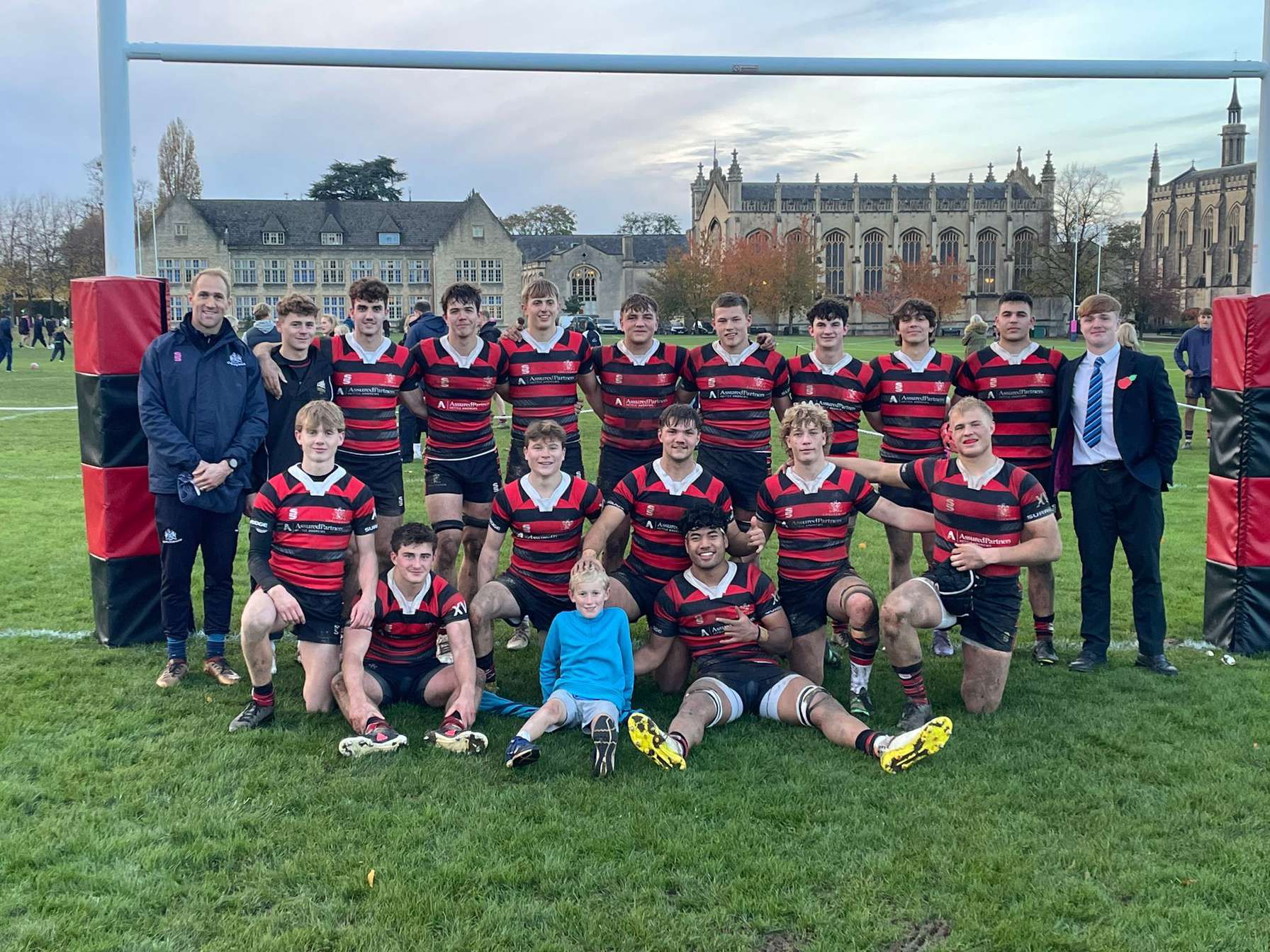
‘I received a scholarship offer from Cheltenham College to play rugby. That’s when I started to drop my other hobbies and focus on my rugby. 

‘Getting a scholarship opportunity to play rugby at a private school was something I couldn’t pass on. 

‘Cheltenham was an unbelievable school. When I look back at it, I miss it. 

‘It was a weird feeling when I was first there coming from a state school where everything was just about football. At Cheltenham, people know about lots of sports and rugby was one of them.’ 
‘The move to Brunel came from being scouted by Gareth Rise and Alex Shaw who are part of the recruitment team within the Trailfinders pathway. They saw me play at a tournament for Cheltenham College. 

‘They spoke to me and my dad about what was on offer with Brunel and Ealing Trailfinders and my dad encouraged me to think about that as a future option. 

‘I enjoyed what Gareth and Alex said about the set-up.’ 

Since then, the rest is history. Fanolua currently splits his time between university rugby and training with the senior men’s team at Trailfinders Sports Club during gaps in the academic calendar. 

‘We are coming to the end of the season with Brunel. It’s the run-in to the important games like play-offs. 

‘I’ve done two pre-seasons with the senior squad at Trailfinders Sports Club. There was a stage when there were a lot of injuries in the back row and I had lots of opportunities to step up. It was very enjoyable and a good experience. 

‘I’m also just having fun being a student. I’ve learnt a lot by being at university – mainly just to look after myself. I’ve learnt lots of life lessons on this journey.’ 
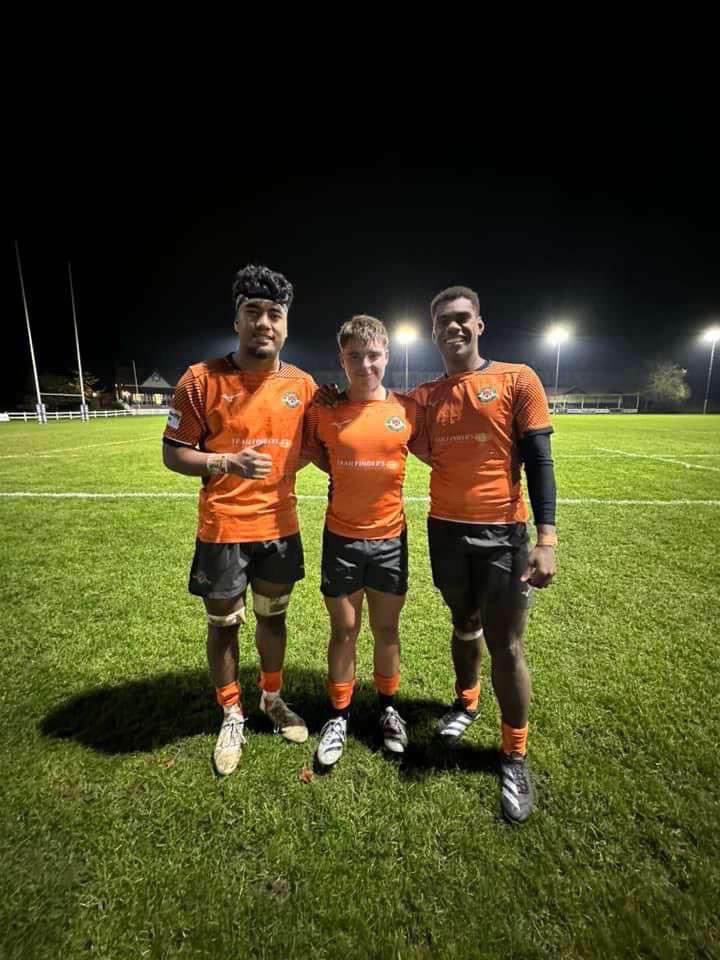
Like father, like son 

It’s evident that Terry Fanolua has been an inspiration to TJ in his pathway to pursuing rugby at a professional level. 

‘My dad is really strict on me. When I was younger, I didn’t understand it or particularly like it. But now having been through what I’ve been through, he’s always tried to help me and try to make me a better player. 

‘My dad is up there as one of my idols. He’s a huge inspiration to me and the rest of my family. We got into rugby because of him.’ 

Whilst the Fanolua’s share a love for rugby, their choice of positions has differed. 

‘My dad played in the centres back in the day. I’m in the back row.’ 

Reflections from the sidelines 

Fanolua recalled how his first injury had been one of his biggest challenges in his career so far. Yet, through his on the sidelines, he came out from it with a refreshed perspective. 

‘My first injury was a big challenge. I thought before that I hadn’t been injured before and that it wouldn’t happen to me. 

‘As soon as it happened, I didn’t know what to do. It was during my time at college as well. 

‘Dealing with the mental side of injury was hard and seeing the other boys play whilst I was on the sidelines. I think that was the hardest part. 

‘Coming back after injury was the best feeling ever. It made me appreciate the sport even more. Prior to my injury, I don’t think I treated the sport perhaps in the way that I should have done or asking for help when my body was hurt. 

‘The whole rehab process taught me a lot, particularly like not rushing to get back to playing if you’re not at 100%. 

‘It was sort of like the fear of missing out. I don’t want to go through that again and I’ve learnt how I need to ask for help at times when things don’t feel right.’ 

The best bits so far 

Whilst Fanolua has only breached the surface of his rugby career and the potential that holds for the future, he recalled fond memories of schoolboy rugby. 

‘I really enjoyed school rugby. It brings back so many good memories. We had so many tournaments that we went to and you don’t really do that once you’ve left school. 

‘I still keep in touch with a lot of the lads that I went to school with. They’re on their own rugby journeys and we update each other on what’s going on. 

‘I get a lot of good advice from my friends because they’re in the same boat as me and they’ve been through similar things that I have. 

‘Speaking to them cheers me up when I’m down. I can always talk to them when I have a good or bad game.’ 

Ambitions for the future 

Fanolua is keeping an open mind to his future possibilities. The back rower is undertaking a degree in business management and is remaining flexible on where life may take him in rugby and beyond. 

‘I’m going to take things as they come and just see what happens. 

‘I want to focus on being a student athlete right now and my parents tell me that education comes first. 

‘My degree leaves a lot of bases open so I can do multiple things afterwards. If I ever got injured again, I have something to fall back on. 

‘I’m interested in the marketing side of business. I just want to learn as much as I can about entrepreneurship.’ 

Offering advice to his younger self 

During periods of rehabilitation, plenty of athletes experience a keen feeling to get back to playing as soon as possible. Fanolua echoed those sentiments. Yet, if he could give advice to his younger self, the teenager facing a period of being on the sidelines, it would be to take things steady. 

‘I’d say not to rush coming back after an injury. Take injuries really seriously. I’m still young but my injury has taken a massive toll on my body. 

‘My other message would just be to enjoy it too. 

‘In some stages of my life, I was really hard on myself but I enjoy the sport. 

‘Coaches have told me I play better when I’m more relaxed. In the past, I’ve been in my head a lot. The advice they’ve given me is to let it all go, to enjoy it. I think that’s helped a lot.’ 

What it means to be a Trailfinder 

The pathway system between Brunel University and Ealing Trailfinders has produced several first team players including Lefty Zigiriadis, Geordie Gwynn, and Josh Taylor. 

For Fanolua, the opportunities that the pathway offers are what stands out to him most. 

‘It’s unreal to be part of the Trailfinders system. The opportunities that you get being part of this set-up is the bit that stands out the most. 

‘The involvement with the diverse group of players. You get to know the boys well and they help you out because they’ve been through the system as well. 

‘Some of the players at Trailfinders have played top flight rugby and they feedback their experiences to me that helps my development. 

‘That’s the best part of being a Trailfinder – every moment is a learning lesson.’ 
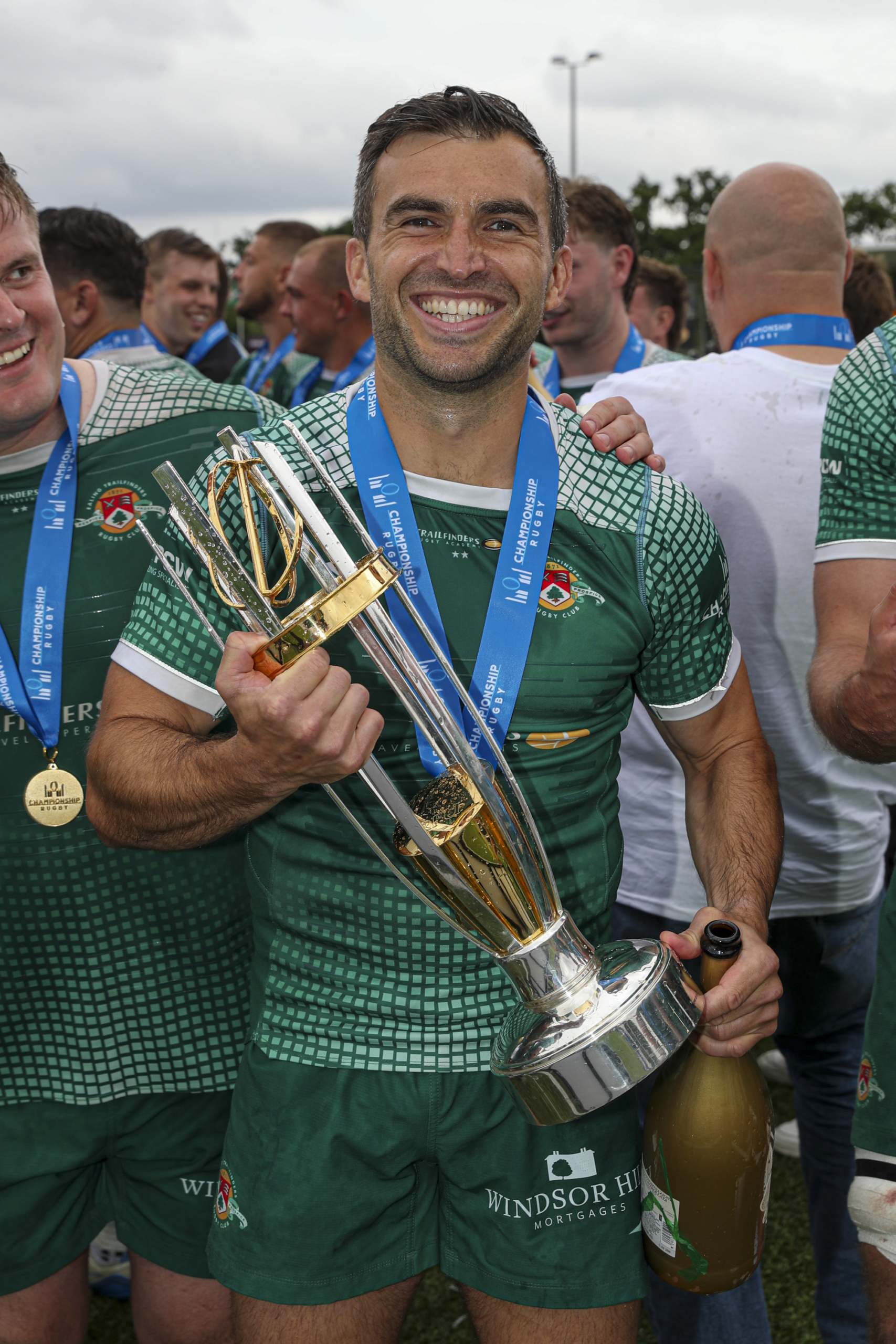
From grassroots rugby in the North East to being a Trailfinders centurion, scrum-half Craig Hampson has played with some of the greats of rugby. 

Craig Hampson—affectionately known by many at Ealing Trailfinders as Hampo—was introduced to rugby at a young age. Growing up in different environments where legends from both rugby league and union were, Hampson has learnt from some of the best in the world of rugby. The scrum-half is one of nine Trailfinders centurions in the professional era with plenty more caps still to come. 

With ambitions to become the best coach he can be and one that has already impacted numerous players in the West Midlands and Greater London, Hampo is a true servant to the game of rugby. 

From the north of England to the south, to the midlands, back to the south, Craig Hampson has had a diverse rugby career playing amongst and against some of the sport’s greatest. This is Craig Hampson’s Trail So Far. 

Going back to the start 

Hampson is in his fifteenth season as a professional rugby player and has represented the Trailfinders crest since 2019. Yet, his rugby roots began further up the M1 at Harrogate RUFC and Ashville College. 

‘I remember being really young, like four or five, when I went down to Harrogate rugby club,’ Hampson said. ‘That’s where my journey started with minis rugby. 

‘All of my school friends played at Harrogate. It’s a lovely club which is great for families. It has a huge minis section. I remember being on the back pitches at the club, just throwing the ball around and loving it. I ended up doing more rugby at school after that.’ 

Hampson attended Ashville College, an institution that really pushed their students to be involved with a range of sports. This included rugby. Hampson took his early love of the sport from his time at Harrogate RUFC and directed it to his schoolboy rugby. 

‘Rugby was more serious at school. We had a fixture calendar with games against other schools in the local area. Ashville was a proper rugby school. 

‘I lived with seventy boys across two boarding houses and they all played sport of some kind. With fields close by, we could just play sport. 

‘I remember being quite young and just practicing goal kicking over the post and I could never get it over as it was so high. But having access to those fields to play just kept me playing the entire time through school.’ 

Hampson went on to trial for regional rugby at age grade level. It was the under 16s regional festival as Castlecroft that helped put him in contention for age-grade north of England selection, a team that would face the other regions across the country. 

As a result of his impact during the regional festival, his rugby talent was recognised as a teenager when he was selected for England training camps. 

Crossovers with sporting talent 

A close friend of Hampson’s growing up was England cricketer Jonny Bairstow who was part of the England cricket team that won the 2019 Cricket World Cup. 

Hampson himself also played cricket and noted that the skills he learnt from playing at school helped him become the scrum-half he is today. 

‘I wish I had enough time to still play cricket because I love it,’ Hampson said. ‘I watch a lot of cricket and grew up playing the sport with Jonny. We played Yorkshire age groups together for a short while. 

‘I was a wicket keeper and I remember watching Jonny and thinking, “he’s amazing”. I was doing alright in cricket but I was better at rugby so picking rugby was an easy choice. 

‘The skills of being a wicket keeper definitely helped me being a scrum-half. Both positions typically involve a lot of talking. Both positions bring energy to the teams they’re in. 

‘I would talk at the batsman, trying to get in their head which is effectively the same when you’re a scrum-half and you’re trying to get into people’s ears, trying to wind people up.’ 

After progressing through the regional age groups, Hampson was selected as part of Leeds Academy. Situated in the heart of the city’s sporting history, Hampson shared facilities and resources with Leeds Rhinos. When Hampo was part of the academy, it coincided with Rhinos’ golden generation. Though in North Yorkshire, union is the main form of rugby, further south in the county on the M62 belt, rugby league holds sports fans captive. 

From 2004-2017, Leeds Rhinos yielded eight titles in thirteen years and had over sixteen major trophies. Three names from the Rhinos golden era are well-known rugby legends: Danny McGuire, Rob Burrow, and Kevin Sinfield. 

‘Rob and Kev’s changing room was just across the corridor from the academy changing room,’ Hampson recalled. 

‘We used the same gym, physios, strength and conditioning coaches and other resources as the Rhinos. It was very integrated.

‘The Rhinos were legends, especially Kev and Rob. It was awesome to see what they did. Everyone copied them. If they trained in skins and no shorts, everyone would do the same.’ 

Leeds Academy was also led by Stuart Lancaster, another rugby legend that Hampson learnt from. 

‘Lani would make us do these crazy fitness drills but it was all part of building our resilience and readying us for what was to come.

‘We would sometimes get to train with the older players when we were in the academy too. We went on loan to different clubs and found ourselves playing men’s rugby at eighteen. 

‘It exposed us to a lot. It was a real baptism of fire to play men’s rugby rather than just age-grade rugby.’ 

The Trail to Vallis Way 

From Yorkshire, Hampson ventured south to Bristol where he played for three seasons. In 2016, Hampson moved to the West Midlands to play for Wasps for three years and after that, he signed for Ealing Trailfinders in 2019 where he has since remained. 

No journey is without it’s bumps in the road or a ready-made path to success. Hampson has had to overcome many challenges in his career. But those moments helped shape the person he is today. 

‘The biggest challenge I’ve faced is being on the wrong side of a coach. It’s hard to deal with that if you feel like you’re doing everything right and the feedback you’re getting is to just continue as you are. But nothing changes. 

‘I experienced that at Bristol for a short period of time. It weighed on me mentally and my wife realised what was happening and she was trying to help me understand the situation. To understand that you can’t change how other people feel but you can change how you feel as an individual.

‘I overcame that experience by remaining confident in myself and that I was doing good things and to keep doing those good things. 

‘I’ve been fairly lucky in terms of avoiding injuries but I did have to have shoulder surgery twice when I was eighteen-nineteen. It meant I had a year out from rugby and missed out on playing a lot when I was in the England under 20s. Being part of that set-up was a big marker of moving onto professional clubs. 

‘When I look back at it now, I was lucky to be kept on because there were lads in a similar position who weren’t. But I built up a lot of resilience during this time. 

‘Being with Leeds at the time helped me through my shoulder injuries.’ 

Career highlights 

After fifteen seasons in professional rugby, there were plenty of standout moments for Hampson to look back on. 

‘There are two experiences from my times with other clubs that stand out to me, although we lost both games. 

‘When I was at Wasps, we played against Harlequins in their Christmas fixture at Twickenham. It was pretty much sold out. I came off the bench in that game just after half-time, so I played about thirty-five minutes. The noise was amazing. The whole experience was unbelievable from the crowd to walking through the gates, being on the pitch.’ 

‘The second experience was when we played Toulouse in the Champions Cup. My opposite number was Antoine Dupont and Cheslin Kolbe was in their back line. Again, we lost that fixture but it was one of my best rugby experiences. 

‘Those are great memories despite the scoreline. 

‘At Ealing Trailfinders, the first time we won the Championship was a highlight. I want us to win it again this year.’ 

Life as a player-coach 

As well as being a full-time professional player, Hampson loves his rugby coaching and is pursuing it as a career option after retirement. 

Currently, Hampson works with Oxfordshire-based team Chinnor and alongside the scrum halves at Trailfinders Women. 

In what seems like an odd plot twist, the scrum-half has also coached forwards during his time living in the West Midlands. 

‘When I was at Wasps, I coached alongside Jimmy Gopperth. We coached Warwick University and Nuneaton rugby club. It was funny because I coached the forwards and Jimmy coached with the backline. 

‘It was still a great experience coaching the forwards because it teaches you different things about the game. 

‘I’ve done some work with Harrow School and they’ve won the Daily Mail Schools Trophy back to back and the Continental Tyres National Cup back to back. I coached them for three years and loved it there. It’s an amazing school with great history and the culture of the school was very impressive.’ 

‘Working with Chinnor has been really fulfilling. When I first joined, Chinnor were quite far down the table in National One. A few years later, we got better but the club turned a corner when Nick Easter joined as Director of Rugby. He helped bring that edge to the team.’ 

‘Chinnor are now a Champ team which is a tad awkward because it’s the same league that Trailfinders are in, but I make it work. 

‘Working with the women at the club is brilliant. I have to speak completely differently as a coach with them compared to my other coaching experiences with men and young boys.’

Early afternoons when Trailfinders Women take to the pitch for skills sessions often sees Craig Hampson working with Brooke Bradley, Isla Norman-Bell, and Ella Amory on kicking technique and pulling the strings as a scrum-half. 

‘Breaking down the skills of kicking for example when I work with the girls is different to when I work with boys. It’s largely because in the past there hasn’t been the platform for young girls to learn the techniques in the same way that boys have been taught. 

‘When I work with the women, I see big changes quickly and their confidence grows. It’s great and so fulfilling. 

‘I’ve learnt a lot about myself through coaching too, about how to deliver instructions and communicate things. What this role has helped me learn is about the importance of adaptability as a coach and learning how to communicate with different people in different ways.’ 

Hampson’s support networks 

The centurion has achieved much in his career and he stated that his wife has been by his side through every high and low. 

‘My wife Charlotte is brilliant. She’s very good at the psychological side of things. She has a good read of the emotional and empathetic side of life. We talk about a lot of things in terms of my coaching. 

‘She’s very helpful at helping me understand why certain players may react in the way they do when I coach them in a certain style which is something I often miss. 

‘My wife has been so supportive of my career. We’re both from the North and she’s been with me through all my movements across the country. 

‘My two daughters are amazing. They understand that I’ve got to be out of the house two nights a week to coach at Chinnor. But then they come and watch me play at Trailfinders and they absolutely love it. 

‘I’ve had a lot of coaches who have helped me on my journey but my most recent mentor Russell Earnshaw has been brilliant for sounding things out. He works across lots of sports including in Premier League football. He’s helped with my coaching delivery a lot and is just a great person to talk to.’

Words of advice

Lee Blackett, the current England attack coach, was involved with Leeds when Hampson was there. Blackett gave Hampson the advice to coach as diversely as possible and it’s clear that Hampson put those words of advice into action. 

If Hampson could offer any words of advice to his younger self—the young boy picking up a rugby ball for the first time in the minis section at Harrogate—he said: 

‘I’d probably touch on my experience at Bristol and remind myself to keep being confident, keep backing yourself to success. 

‘I’d say, don’t let other people’s opinions change how you feel about how you play. You might have to take on feedback and receive criticism, sure. But it’s about backing yourself. 

‘Confidence is contagious. If you’re confident in yourself, that will come across to the coaches and other players. With confidence comes reliability. People believe in you as you believe in yourself.’ 

What is means to be an Ealing Trailfinder 

Being a Trailfinder is about a lot of things: resilience, determination, continuous self-improvement. For Hampson, being a Trailfinder is about being a winner. 

‘We’re a group of people who want to win. Our culture is a winning culture. I don’t want to lose. 

‘Everyone in the squad has a voice and is striving towards the same goal. To be a Trailfinder is to be a winner.’ 


Our Trail So Far pieces celebrate our players’ ‘Rugby Roots’ and mark our initiative of the same name. In our women’s fixture against Loughborough Lightning (29/03) and the men’s clash with Nottingham (04/04), players will pay homage to the teams where it all began for them, by wearing the club/school socks from their first sides. Supporters can join us for the celebrations at either game by purchasing tickets now.

For many players, it can take several appearances for them to find themselves over the tryline or to truly burst onto the club rugby stage. But that was not the case for Trailfinders winger Grace White. 

With a try on debut in Premiership Rugby 15s to a scoring yet again on her Club debut for Trailfinders, Grace White has given us a flavour of her lightning speed and great finishing abilities. 

The winger is one of many Trailfinders players who study at Brunel and exemplifies the successful partnership between the university and the Club. 

Growing up, White was incredibly sporty, engaging with a diverse range of activities. Yet, it was rugby that captured her heart. 

This is Grace White’s Trail So Far. 

Growing up in rugby country 

White grew up in the South West of England, home to plenty of rugby clubs from grassroots all the way to professional level. 

She recalled her first memory of rugby. 

‘My first memory of rugby would have been in year eight at school. It was the first time they introduced rugby to the girls section of PE. I was playing football at the time and I remember playing my first rugby session then going home and immediately telling my dad I wanted to sign up to the local club.’ 

The club in question was Winscombe RFC. Winscombe boasted a large girls section – a highly unique trait for a grassroots club over a decade ago. 

‘The girls section was already set up. There was a really influential man in my life called Gareth Waterfield, who set up the whole women’s section. 

‘We had a really prosperous club that was full of girls. So we were able to field teams week in, week out, which I know a lot of people, sort of ten years ago, a lot of teams would struggle to do that. So I was really fortunate to play in a team that could have fixtures every week. If we couldn’t find a fixture, we had enough girls to play in club fixtures, which was really unique.’ 

Though the South West region in England has high participation rates in rugby at all levels, White recalled how Winscombe pulled female talent from across the region. 

‘I don’t really remember there being that many other clubs around. I think people tended to congregate at Winscombe. 

‘People like Jess Cooksey [Trailfinders Women] played there. Ellen Scantlebury [Exeter Chiefs], Lucy Burgess [Harlequins], who are all other players you’ll see in the PWR. It’s quite an advanced club.’ 

The family connection 

Football, tennis, and hockey were all sports that White picked up throughout her sporting career. But the family connection to rugby made the sport stand out for her after her initial taste of the sport at school. 

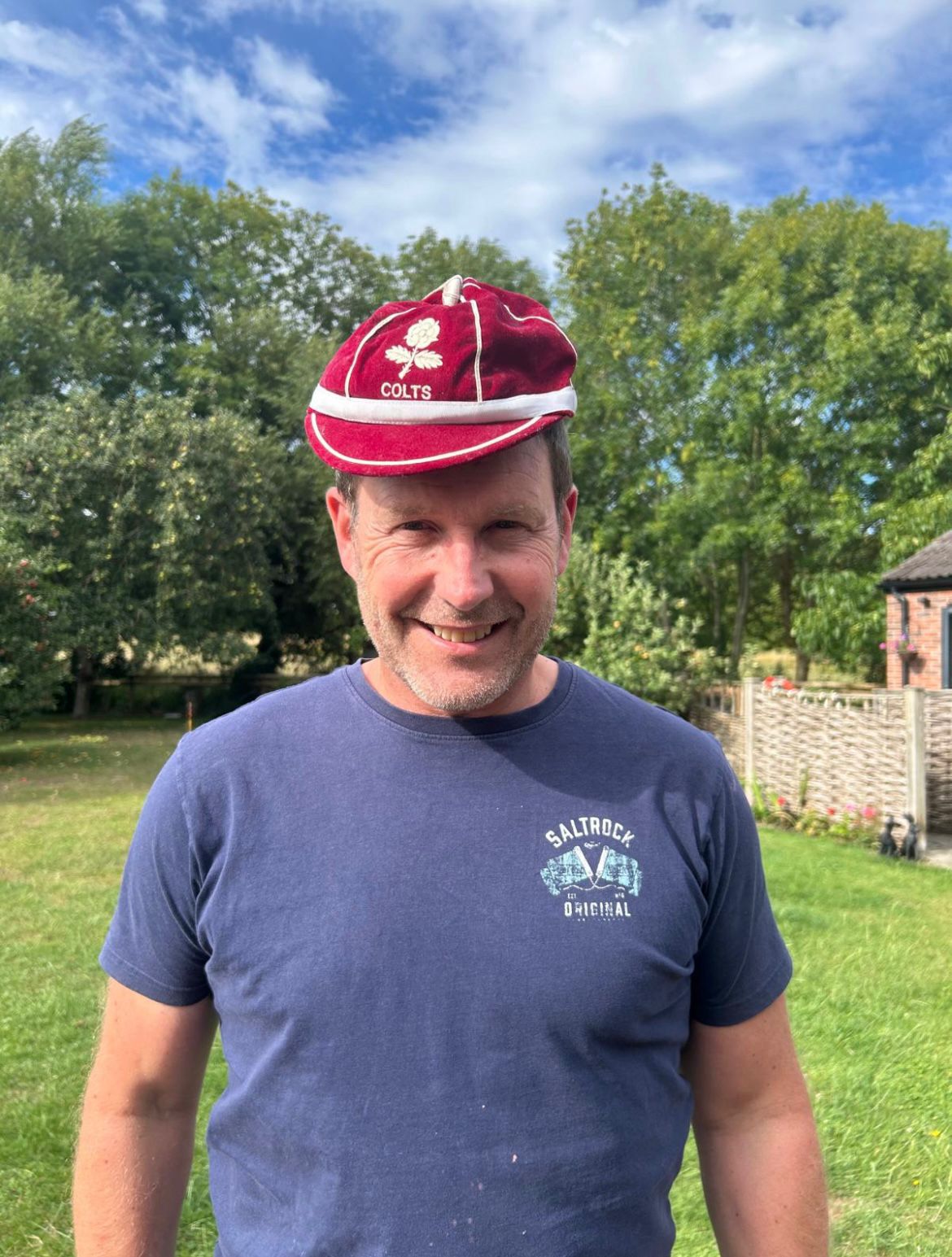
‘I think my ambition to play professional rugby stemmed from my dad. He played for England Colts. 

‘Once I joined the local club as well, he signed up to coach on the same day I signed up to play. He coached me from day one of playing rugby away from school all the way through to under 18s and he sort of still actively coaches me now. He’ll watch every game and give me feedback. 

‘But he’s had his England Colts cap hanging on the wall in his office since I was little. So I’ve seen that and seen the pictures of him from his career. I find that really inspiring and motivating. 

‘I’m a little bit competitive with him. He’s played at Twickenham, I haven’t yet. Hopefully, one day I will.’ 

Mark White, Grace’s dad, with his England Colts cap

Grassroots to greatness 

Since her first memory of picking up a rugby ball in her early adolescent years, White has traversed a journey from grassroots rugby to representing her country at age-grade level and with Great Britain as part of their Rugby Sevens programme. 

‘I stayed at Winscombe from thirteen to eighteen. There was a slight overlap with Somerset county trials, going in for the under 18s and then it became the centre of excellence programme. So I was playing in centre of excellence for Bristol Bears whilst still at Winscombe. 

‘I transitioned into the senior women’s set-up at Bristol when I was seventeen. 

‘I played there for two years, spent a season playing quite a lot and then a season rehabbing quite a lot before coming to West London for both rugby and university, where I hope to stay for quite a while.’ 

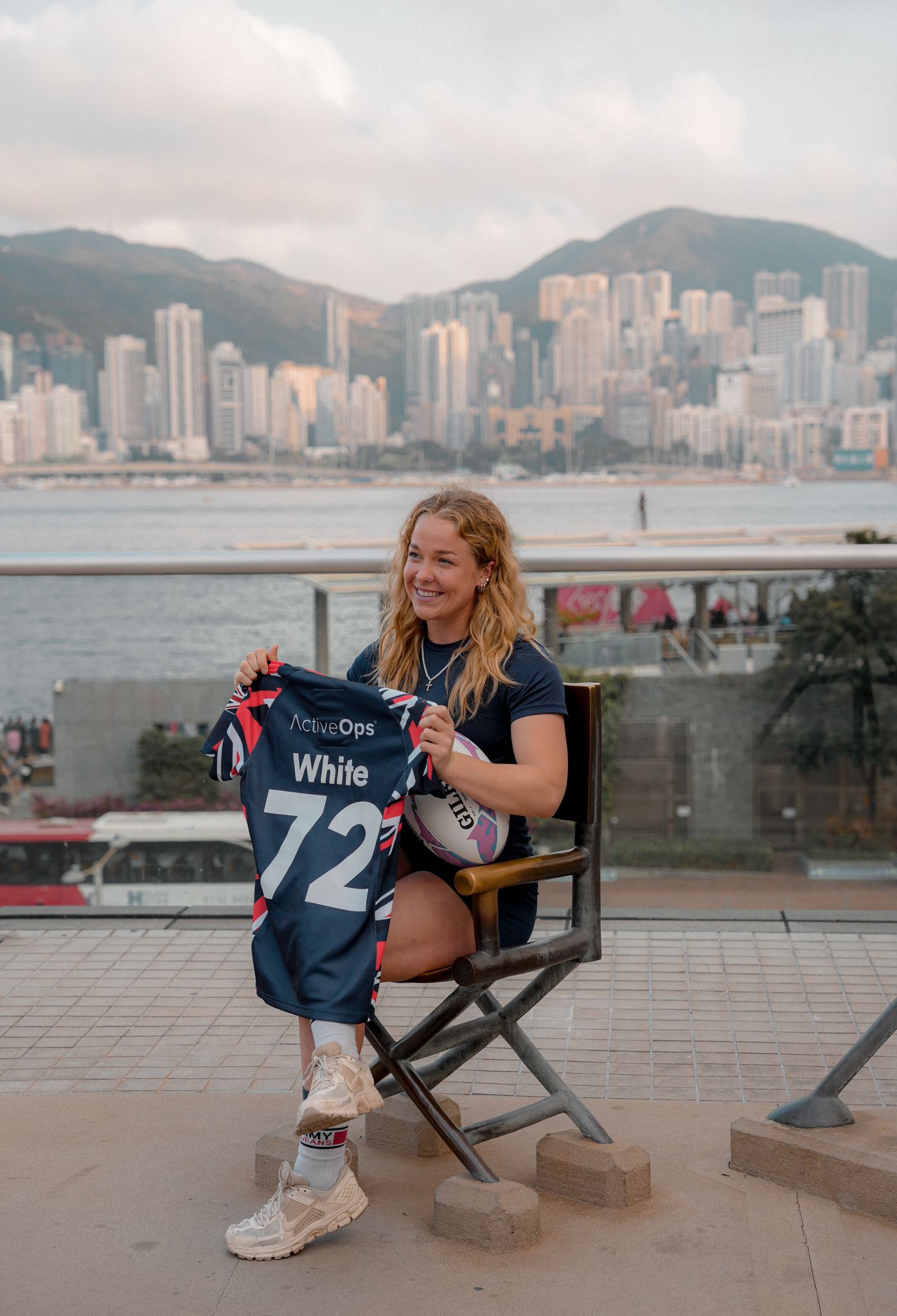
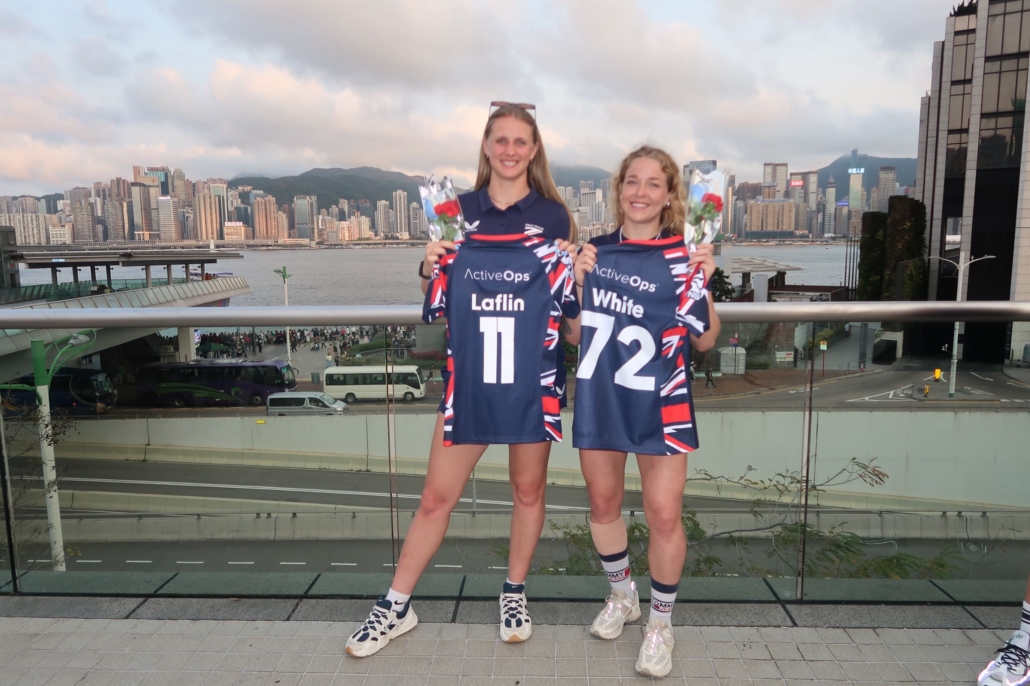
White has represented England at U20s, U21s as well as flying the flag for Great Britain on the World Sevens tour. White made her GB7s debut in March 2025 in Hong Kong. 

‘I feel like the shirt presentation and just holding a shirt with the GB badge on was a bit surreal. I was in Hong Kong, so somewhere I never even thought about travelling to. I almost wish I could relive it because I think at the time I was in such an elated fog that I didn’t necessarily appreciate it as much as I could have.’ 

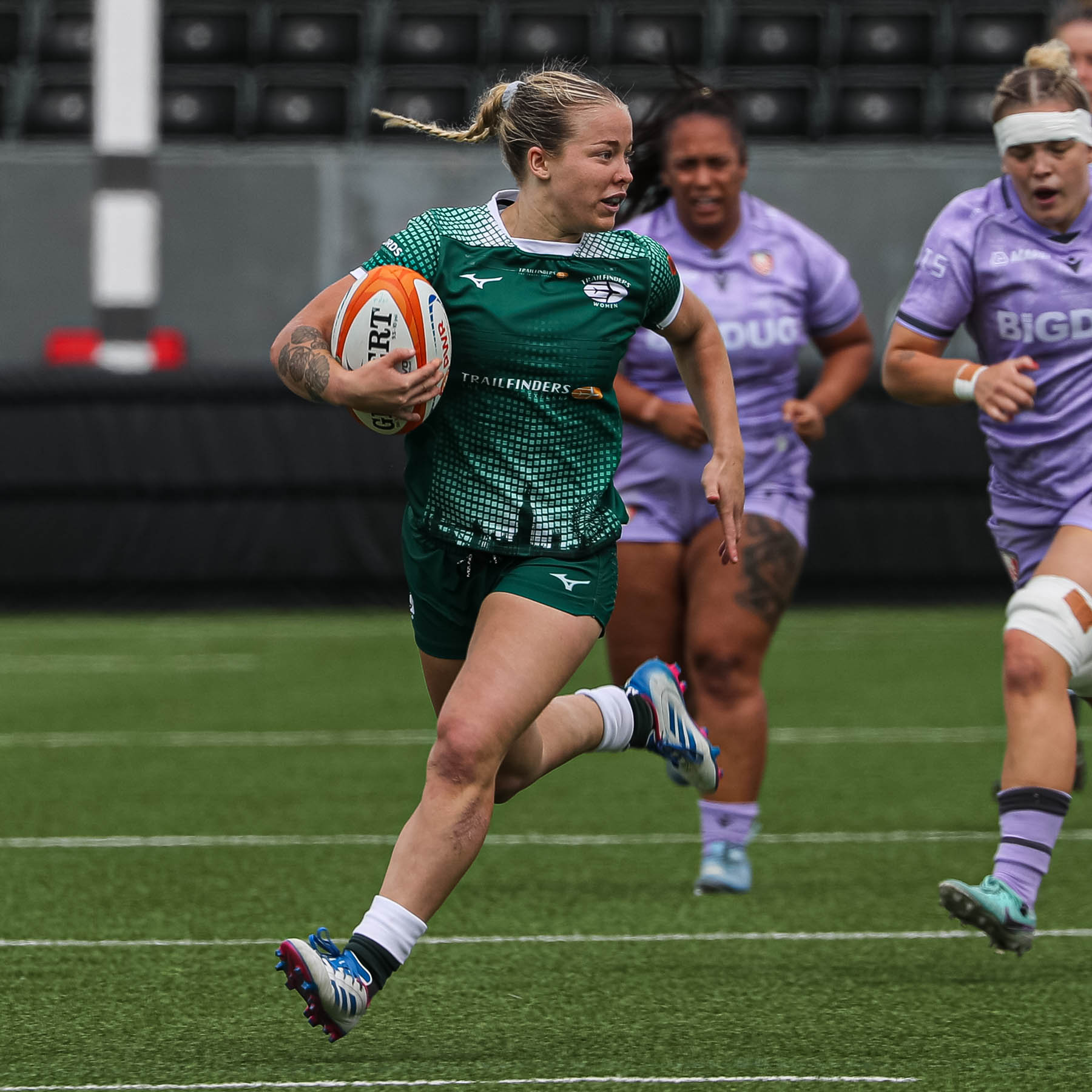
As a winger, a big part of White’s role is to score tries for club and country. She scored on her Prem debut for Bristol Bears and did the same again when she joined Trailfinders Women. 

She reflected on her favourite try that she’s scored in the PWR so far this season. 

‘I think the cross-field kick from Meg Jones for me to score in the left corner against Bristol was my favourite so far this season. 

‘We had been practising that set piece all week at the club. And I don’t think that many of them worked in training. But the more mistakes, the better. 

‘In the match, she sent it across and it was a perfect kick. But it was one of those where you can easily drop it because it’s almost too easy to catch. So I was just trying not to overthink: I just needed to catch the ball and then dot it down. That try being against my old club too was a very good feeling.’ 

Talent pathways

White is currently studying at Brunel University, partner to the Trailfinders’ set-up. She has featured in the university’s inaugural season in BUCS Super Rugby as well as representing Trailfinders Women in the PWR and PWR Cup. 

Being part of the Trailfinders pathway gives White the best of both worlds: rugby and education. 

‘I actually took two years out of education thinking about what I wanted to do whilst also being at Bears and rehabbing. So I had a long time to consider what I wanted to do if I wanted to just be restricted to going to the Bristol universities or if I wanted to push the boat out and go somewhere else. 

‘I localised my search to universities that were close enough to a premiership club. Then I reached out to some of the head coaches. 

‘So I reached out to Trailfinders where Giselle Mather was in charge at the time. I came up and had a look around and absolutely loved it. And then it was just a case of choosing my course, which is physiotherapy. Brunel have a great physiotherapy department.

‘Since then, it’s been about bridging the gap between Brunel and Trailfinders. The club have been really supportive of that. I’ve had the best of both worlds since being here.’

Learning and growing 

Whilst White is still in the early stages of her rugby career, her positive mindset has been shaped by some of the challenges she has faced as a player so far. 

‘Naturally you always think of injury. That’s always been difficult when you can’t play the sport you love. Everyone will tell you that it’s the worst side of it when you’re watching everyone play and train and you’re stuck in the gym doing, I don’t know, resisted ankle movements or whatever it might be. 

‘I think sometimes when you just feel like you’re in a bit of a slump, that can be really hard to overcome. That might come after a couple tough games or a couple narrow losses where you feel like as a team you should have won, that can be mentally really frustrating. Especially when you’ve got big goals. 

‘It can be really tough to feel like you’re not always performing to your best as a squad or to what your potential might be. That’s also really challenging. And also, as a winger, sometimes you’re freezing cold and you don’t get the ball. That makes you question things at the time.’ 

White also mentioned how overcoming many of these challenges is about taking accountability, reflecting on the past and using that to move forward in a positive way. 

I think it’s a case of reviewing, being accountable, and asking yourself “what could I have done better? What did I do wrong that I can improve on?” 

‘I think you’ve got to be really honest with yourself: look at yourself first before you start to look at the team. Because I can only really control what I do. And then as a collective, what do we want to chase for the upcoming week? 

‘A lot of these things are about how you flip the script from feeling rubbish into let’s prove a point. 

‘If I drop the ball on the pitch, I don’t dwell on the mistake. I try to think about how I can redeem it, how I can wash away the error. You can’t dwell on stuff that’s gone behind you.’ 

Highlights to date 

Though White surely has plenty more memories to make in her rugby career, she recalled some of her career highlights to date. 

‘Getting my first Prem cap when I was at Bristol Bears was definitely a career highlight. Getting a try on debut as well just affirmed that I was in the right place, that I was meant to be playing in the league. 

‘Achieving my first cap for GB7s was also surreal. Playing 7s has helped me feel comfortable on the edge with 15s. I had to defend twenty metres in 7s so when I have to defend ten metres in union, it doesn’t feel as much of a challenge. 

‘Playing 7s helped me with my confidence and taught me that I can rely on my individual skillset.’ 

Future ambitions 

Grace White has proven herself to be an exciting prospect in the women’s game. Her ambitions at club and country go far beyond what the young winger has already achieved. 

‘I think I’ve recently started thinking about my 50 caps because that feels like a really big deal and something I’d be really proud to get to. 

‘I’m with England under 21s at the minute as well. We’ve got a huge goal as a squad to beat France because it’s been a long time coming. 

‘I have dreams of being a senior Red Rose, but that’s a big step.

‘I’m just taking things as they come and working on what I can do to become a better player everyday.’ 

Grace creates 

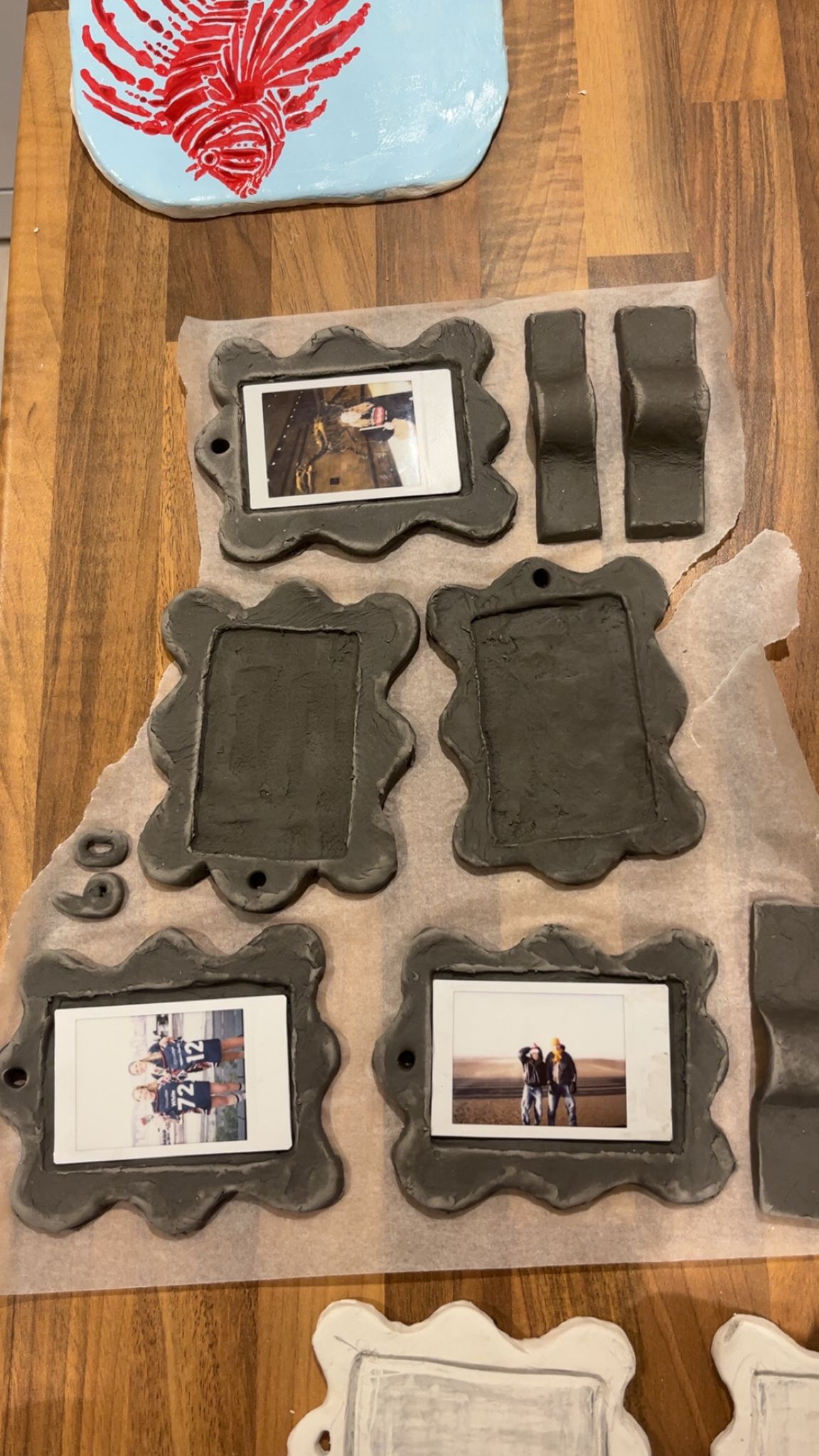
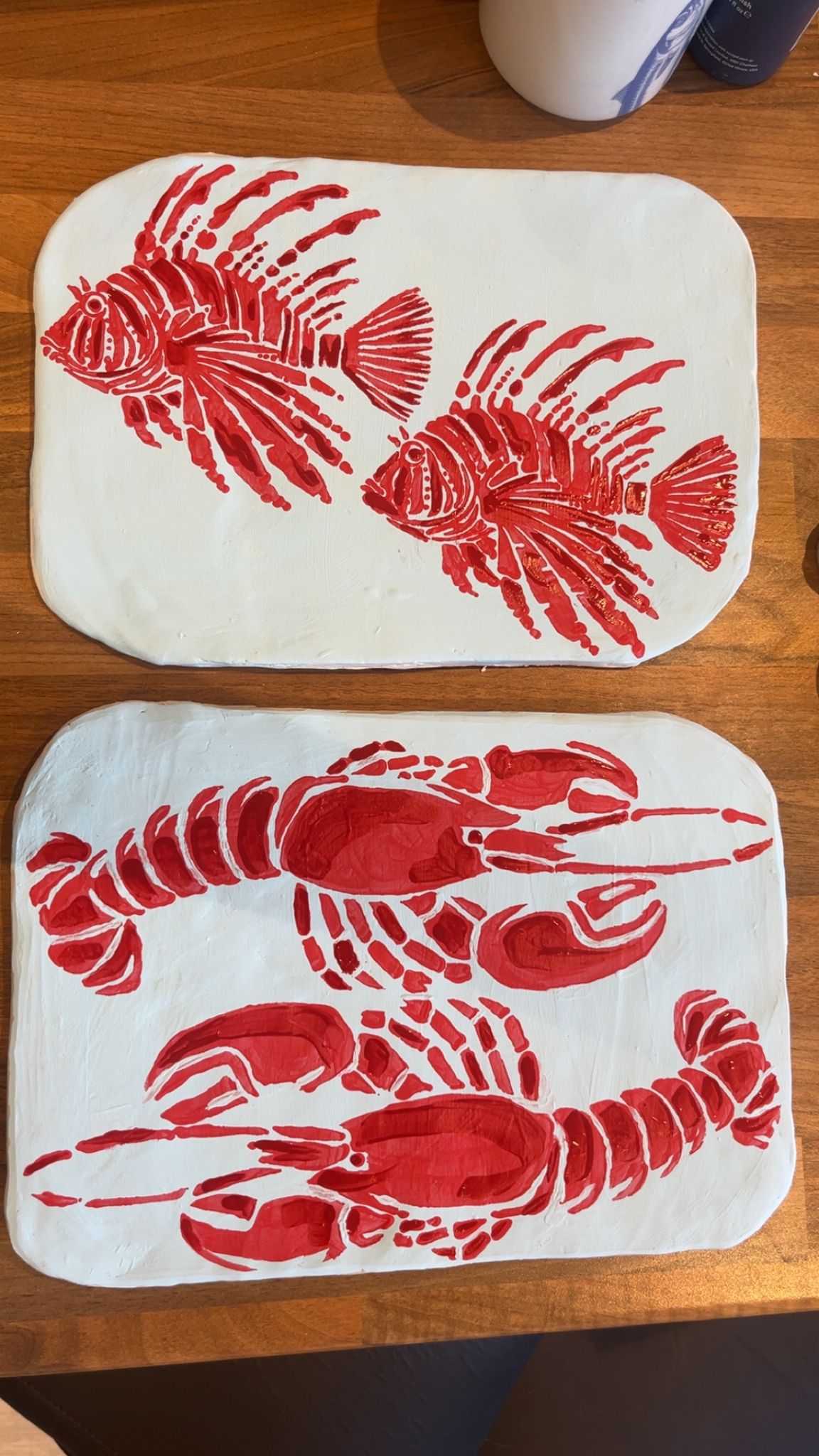
Whilst rugby and studying occupies most of Grace’s time, outside of training and academia, she likes to create. Clay is her material of choice for the most part and Grace’s creations have varied from an egg crate to general crockery. 

‘When I have breaks in rugby or university, I love getting out the modelling clay and painting.’

Some of Grace’s creations

‘I enjoy reading. Mostly fantasy books and series like Fourth Wing, Throne of Glass, A Court of Thorns and Roses.

‘I’m a firm lover of spikeball, as most of us are. When I’m away from the club with longer breaks in rugby, I like to go home and play tennis with my parents.’ 

Words of advice 

It was a decade ago since White took her first punt at rugby. She reflected on what she would say to her younger self if she had the chance. 

‘Pressure doesn’t breed performance for me. I’m someone that’s always been like “I need to perform at my best” and most of it’s perceived pressure. 

‘Often it’s just expectations that I have for myself. When I was thirteen and going into rugby, I would say just relax and enjoy it. You’re young, you’re learning, and just embrace being with your teammates rather than treating every game as something that I must prove to myself that I’m good enough. 

‘Watching Vicky Laflin play inspires me. She’ll work off her wings and pick up lines in opportunist ways. It works well in her favour because she’s just having fun and reading the game.

‘Watching her play really inspires me to try and apply that attitude more to my game, to be free on the pitch and try new things.’ 

Vicky Laflin (left), Grace White (right)

What it means to be a Trailfinder 

For Grace, rugby is the mainstay in her life. It’s the thing that is central to her. She put into words what it means to be a Trailfinder. 

‘It’s sort of become my life. We train so often; my friends are based at the club. The club is where I feel comfortable. 

‘I just don’t think there’s somewhere I feel more content than when I’m here: training and working hard with a group around me that are doing the same. 

‘Rugby gives so much back that it is really my lifeline and it’s a huge part of my personality. I know all athletes are more than just rugby players, but I like to commit a lot of myself to a sport that gives a lot back to me. 

‘I have a lot of hobbies and nothing gives back in the same way that rugby does. Why wouldn’t I commit all my passion, time and effort into it. It’s my long-term future and rugby is a big part of who I am.’ 

Our Trail So Far pieces celebrate our players’ ‘Rugby Roots’ and mark our initiative of the same name. In our women’s fixture against Loughborough Lightning (29/03) and the men’s clash with Nottingham (04/04), players will pay homage to the teams where it all began for them, by wearing the club/school socks from their first sides. Supporters can join us for the celebrations at either game by purchasing tickets now.

Not many professional athletes become club centurions, but Kyle Whyte is one who has.

After receiving his 100th cap for Ealing Trailfinders in the 0-71 win over Ampthill in Round Six of the Champ this season, the loosehead prop joined eight other club centurions on the Trailfinders wall situated in the clubhouse at Trailfinders Sports Club. Whyte joined Trailfinders in 2020. Yet, it was a diverse journey that led the South African born prop down the Trail to West London. This is the Trail So Far for Kyle Whyte. 

Rugby Beginnings 

Whyte was born in the mid-1990s in South Africa into a rugby loving family. Following in his father’s footsteps, Whyte picked up rugby in some of the best sporting schools in Cape Town and Johannesburg. 

‘The first school I played for in South Africa was Bishops Diocesan College. My dad actually did a bit of coaching at the school. He came and coached me at under nine level. It was cool to have my dad being on the sidelines and teaching me directly. 

‘My dad was also a prop, but he went to lots of different schools growing up and I moved from Cape Town to Johannesburg back to Cape Town because of his work.’

Whilst Whyte recalled his first memory of rugby at Bishops, he said that he learnt much of his early rugby skills at Rondebosch Boys’ School. Rondebosch boasts an array of professional sporting alumni including Joel Stansky, Springbok fly-half famous for the winning drop goal against New Zealand in the 1995 Rugby World Cup final. 

‘I was only at Bishops for two-three years,’ Whyte said. ‘At that age, it wasn’t really competitive. It was more about learning the gist of rugby. After that, I lived in Johannesburg for two years then moved back to Cape Town and went to school at Rondebosch. I stayed there from when I was twelve to eighteen. 

‘I think a lot of the schools in South Africa are very rugby driven and Rondebosch is a big rugby school in South Africa. They did push other types of sports, though rugby was one of the main sports. You could see that on the weekends when they made it compulsory for other students to come and watch the first team play. I had to watch the first team play from a young age and I always wanted to be a part of that.’ 

Rugby was not the only sport Whyte was involved with growing up, however. 

‘I did waterpolo when I was younger. It is a team sport but at the same time the training is very solo. A lot of it is about improving your fitness. It was a good cross with rugby – it meant I was fit.’ 

With temperatures of high twenties edging into thirty degrees Celsius, South Africa boasts weather that many Brits can only dream of. Whyte recalled fond memories of being in the pool on hot days back in South Africa. 

‘It was really nice to be in the pool in the summer playing waterpolo. I made it to the provincial teams. I really enjoyed it.’ 

Come his penultimate year at school, Whyte had to make a decision between the two sports. 

‘My parents said to me to pick one sport over the other because I had to focus on my academics. As a career choice, there were a lot more options with making a career out of rugby in South Africa so that’s one of the reasons why I chose rugby. 

‘It was an easy decision to pick rugby over waterpolo. The 6 o’clock training sessions before school, being in the pool where it’s just swimming and then another session after school… it was a lot of training and time away from the study books. 

‘Rugby was a sport I could make more a career out of compared to waterpolo too.’ 

The Journey 

Growing up in Cape Town, there’s a huge community behind the DHL Stormers, formerly the Stormers. Perhaps it was fate that schoolboy Whyte donning a Stormers cap would one day wear that club badge on his chest as a professional player. 

‘My dad is a big Stormers supporter. I’ve got pictures of me and my cousin wearing Stormers t-shirts, going to watch the games on a Saturday at Newlands. I always wanted to play for them.’ 

Kyle Whyte (left) and his cousin Grant (right)

‘When I was at school, my agent Rod Labuschagne actually ended up being a coach of mine when I was sixteen. He approached me and said that he thought I had potential. He pushed me through the career side of rugby. 

‘I started my rugby career straight out of school. My first professional contract at under nineteen was basically a year spent in a hotel with other players, and it was rugby every day. That year primed me for professional sport: being in that mindset of playing every day. My job was to play rugby. 

‘Between nineteen and twenty-one, I played for Western Province in the Currie Cup and then got my first senior contract with Western Province Stormers. 

‘My dad was born in Inverness, Scotland which meant I was Scottish-qualified. That opened up the opportunity for me to play rugby in Edinburgh. I was so excited about it as I had dreamt of going overseas and playing rugby. 

‘I moved to Scotland for around two years. I really loved living in Edinburgh. After my time in Scotland, I moved back to South Africa to be with the Sharks.’ 

Prior to playing in the United Rugby Championship, the Durban-based club featured in Super Rugby as well as the Currie Cup, though an injury to Whyte’s shoulder meant he missed much of the Super Rugby season. 

‘With my shoulder injury, I did miss out, though it was nice to be part of the team that won the Currie Cup and celebrate with the other boys.’ 

With every cloud comes a silver lining, however. 

‘Whilst I was at the Sharks, we had a coach in residence who came for a three-week coaching clinic. He was the Head Coach for Bayonne in France. He asked if I would be interested in playing in France given that the Super Rugby season had ended and the club rugby season in France was just about to get started. So, I moved over to France. 

‘I really enjoyed living there. It was such a different culture, and they help you learn the language. I had two sessions a week where I sat with someone and they taught me French. Though, I was quite lucky because at that time, I had joined Bayonne when there were twelve other international players so I wasn’t just thrown into the deep end with it all. 

‘I was still doing some rehab when I arrived at Bayonne and the guy I was working with had never left France. There were a lot of hand gestures and signing to get the messages across at times. 

‘Bayonne is a beautiful place. I still go back to visit my son who lives there.’ 

Professional sport does mean that many things can remain uncertain. At the time Whyte was contracted with Bayonne, the club was playing in the Pro D2, the league below the Top14. Though promotion and relegation are a pinnacle part within professional club rugby in France, Whyte did not know if Bayonne had budget to keep him contracted for another season. 

‘I didn’t know if Bayonne was going to get promoted that season and the forwards coach from London Scottish—who were still a full-time team at the time—had been at Edinburgh at the same time as me. He reached out to me and asked if I wanted to come back to the UK. I jumped at the opportunity because there was so much uncertainty around budget at Bayonne. 

‘Funnily enough, Bayonne ended up winning the league and got promoted. I could have had a season in the Top14. Yes, I could have waited for Bayonne to decide on my fate but there was too much uncertainty. You have to make a decision when stuff like that comes your way.’ 

Whyte during his time at Bayonne after winning the Pro D2 in 2018-19

Whyte played for London Scottish during the 2019-2020 season until the world was plunged into lockdown because of the COVID-19 pandemic. Changes in finances at London Scottish during that time meant that Whyte had to reassess other options. The prop didn’t want to move on from rugby when he felt like he had more to give to the sport he loves. 

‘There was a lot of uncertainty. But then Ealing Trailfinders came forward and said that they had been watching me and were impressed. They offered to bring me in. The rest is history.’ 

The Learnings 

Reflection is a key skill to enable professional athletes to succeed. Without reflection, there’s no way for an individual to learn, grow, and implement change. Whyte offered his thoughts on some of the biggest challenges from his career, what he learnt from them and how he’s using those reflections to set up a platform for a career post-rugby in restaurant management. 

‘One of my biggest challenges at Ealing Trailfinders was not playing consistently at a point during my time here. When you’ve been at a club for as long as I’ve been at Ealing for, of course there are ups and downs. It can seem like groundhog day when you feel like you’re not performing at your best. 

‘I think it was either my third or fourth season at Trailfinders where I wasn’t selected for about a ten-week period because I was off form and needed something outside of rugby to motivate me again. 

‘When Brett Wilkinson was here at the Club, he was a good role model for me. He spoke to me and said that I needed to find something else other than rugby that brings me excitement. Something that would take my mind off work. 

‘At the time, I was just coming in to do my gym work, training, rugby, then went home and didn’t do much. The cycle would repeat. So, I had to find my ways of motivating myself again.’ 

One of Whyte’s motivations is having downtime with his dog. 

‘I enjoy taking my dog for walks. He keeps me going.’ 

‘I’m also studying on the side now – a business management course. And I’ve been speaking to someone that I met through Connect Through Sport. He’s organised a few meetings for me with people that work in restaurant management. I’ve got an upcoming meeting with the CEO of Six by Nico and we’re going to have a chat about exploring a career in restaurant management after rugby.

‘I love cooking and I enjoy food, but I could never see myself being a chef. With my business management course, I could see myself running a restaurant and hopefully in the future, open my own restaurant.’  

Connect Through Sport is an initiative organised by the commercial department at Ealing Trailfinders. The programme aims to offer a bridge between athletes and the business world to create meaningful opportunities beyond the rugby field. 

Whyte is immersing himself in the offerings of Connect Through Sport to help create a platform for his career after professional rugby. 

The Highlights: a winning career 

For many rugby players, they’re fortunate if their team wins one, perhaps two trophies in the course of their professional career. But for Whyte, there have been plenty of career highlights that have included winning silverware. 

‘I’ve been very lucky with winning titles in my career. It started off with my under 19s season at Western Province. We won the U19 Currie Cup in my first season. In my second season, we won the U21 Currie Cup.’ 

Whyte after winning the Under 21 Currie Cup with Western Province

‘When I moved to Edinburgh, I think on my third or fourth cap, we were in the quarterfinals of the European Challenge Cup. As a 21-year-old, that was a big deal for me playing against La Rochelle. 

‘Another big moment for me was winning the Pro D2 with Bayonne.

‘Then coming to Trailfinders and winning Championships. It felt very rewarding when we won the Championship for the first time because I had played so much rugby in Trailfinders colours. As with Bayonne, the win was great, but it wasn’t as rewarding because I didn’t play so much. 

‘It felt so much more rewarding winning with Ealing because I had gotten through all of pre-season, played most games, and then to win was amazing.’ 

Goals for the future 

Though Whyte has already completed a diverse and successful professional career, the loosehead prop still feels like he has plenty more to give to the sport before pursing his goals of restaurant management. 

‘I’d like to say that I have four-five more years left in me with rugby. I want to keep pushing myself, putting myself in contention for selection. We’re an ambitious club – we want to play against the best. 

‘We have a lot of talent coming through at the club, so I want to put myself in the best position to continue being selected. 

‘It’s also important for me to set up a life after rugby. Once I’m finished as a player, I do think I’ll have a clean break away from the sport. Coaching isn’t something that I want to pursue. 

‘Of course, I still want to make the most of my time in rugby but after it’s over, I’d like to do something completely different. Hence why I’m trying to work towards restaurant management with my studying and involvement with Connect through Sport.’

Having the right people at your side 

Success is rarely achieved in a vacuum. Often, it is the people around us who help to ensure our success. For Whyte, there are three people who have shaped him into the athlete and individual he is today. 

‘My partner, Lauren. We’ve been living together for the past year and we’re big support systems for each other. We always find time to listen to each other, especially after days that feel harder than others. 

‘Lauren comes to a lot of the home and away games too. She’s a big part of my support system.’ 

Kyle and his partner Lauren

‘My father is also a big part of my life too. I speak to him a lot. He’s always been very supportive of my career.

‘Rod, my old coach and agent too. Whenever I have questions or concerns about my career, he’s someone that I always go to. Rod has always been a great friend of mine – kind of like a brother. 

‘Rod has helped me a lot with my career choices and has looked out for me. He’s a great guy. When I went back to South Africa on holiday last year, I stayed with him for a couple of days. We braaied, had a few drinks and lots of conversations. It was nice to be with him.’ 

It’s often the case for many South Africans that the best memories are made with meat over a flame, the conversation flowing with the braai in full swing. 

If you could give advice to your younger self

With time comes learning and sometimes it’s the case that only time can teach an individual the most important life lessons. Whyte offered his thoughts on what he might say to his younger self if he could, to the young boy at Bishops in Cape Town who first picked up a rugby ball. 

‘I probably wouldn’t say much. Though, I would say, just do what you’re going to do in life and learn from the mistakes you make.’

What it means to be a Trailfinder

Whyte is one of nine club centurions in Trailfinders’ professional era. He offered his thoughts on what it means to don the green and white colours. 

‘Being part of Trailfinders has taught me a lot. Every team wants to win and it’s rewarding winning more than losing and being on top. But it also teaches you that you need to be on it every week, to not take anything for granted because there are a lot of people who would love to be in the position you’re in.’ 

Whilst Whyte will surely accumulate more caps for the Club in weeks, months, and seasons to come, for now the focus is on performing at his best and helping Ealing Trailfinders continue to make history. 


Our Trail So Far pieces celebrate our players’ ‘Rugby Roots’ and mark our initiative of the same name. In our women’s fixture against Loughborough Lightning (29/03) and the men’s clash with Nottingham (04/04), players will pay homage to the teams where it all began for them, by wearing the club/school socks from their first sides. Supporters can join us for the celebrations at either game by purchasing tickets now.

After scoring two tries in the win against Hartpury that made history for Ealing Trailfinders, Michael Dykes reflects on breaking the Champ Rugby record. 

The 19-46 win over Hartpury on Saturday 14 February at 4ED Stadium led Ealing Trailfinders to break the Champ Rugby record for the most consecutive wins in the league. Twenty-two consecutive wins in the league ensures that Trailfinders remain unbeaten this season after securing the Championship trophy in 2024/25.

In the eight try win over Hartpury, winger Michael Dykes scored two tries and was pivotal in the attacking waves that meant Hartpury lost on home soil for the first time this season.

Dykes offered his reflections on how it felt to break the Champ Rugby record as a member of the starting XV.

‘Yeah, it was pretty amazing actually,’ he said. ‘Especially because Hartpury had a strong record this season at home. It was a big thing to see if we could it: break the record and beat Hartpury on home turf.

‘But then we went out there and we smashed it.’

Michael Dykes, Hartpury vs Ealing Trailfinders, Round Seventeen

Hartpury had proved a tight contest in Round Five at Trailfinders Sports and the Trailfinders squad knew how much of an attacking threat the Gloucestershire side posed. Dykes spoke about how the different conditions playing Hartpury at home versus at the 4ED Stadium did not phase the squad.

‘The conditions were a lot different. We were all on the same page. We had a really good Thursday training session, so we were all aligned.

‘We’re just loving our rugby. It was really enjoyable to be out there at Hartpury, spreading the ball wide.

‘We’re believing in ourselves a bit more now and getting the outcomes from training. It’s nice that we can put it on the pitch.’

The synergy within the Trailfinders squad is showing in their consistent performances and unbeaten run so far in the competition this season.

In the record breaking win, Trailfinders were able to play with speed, width, and plenty of attacking flare – the perfect conditions for a back three player to shine. Dykes scored two tries, had one try assist, and a key line break. He reflected on his performance as one of his best this season.

‘I definitely think it’s my best performance this season. Because everything went well from Thursday training, it sort of helps you clear your mind for just doing what you do best on the pitch.

‘There’s no other way to describe the feeling of scoring a try other than excitement but it’s sometimes a feeling of relief too. It’s nice as a winger to score because that’s our job really to be on the end of tries. It’s great when the boys can also set the back three up for scoring too.’

Trailfinders have displayed consistent performances this season, a lot of which comes down to the combinations of mentality, physicality and squad rotation. Dykes emphasised how the squad needs to remain focussed as the rest of the season unfolds, especially considering the revised knock-out format that was introduced into the Champ this season.

‘We have to stay focussed and take it game by game. In the past, we’ve won the league with a couple of games to go. Whereas this season, anything can happen in the knockouts.

‘The mentality is to continue taking each game as it comes and if we play our game, we’ll be at our best.’

Outside of his playing career, Dykes is equally competitive in his personal life. Gaming is a popular pastime for many of the players in the squad and Dykes is part of a Call of Duty group.

‘I’m a PS5 guy and there’s a group of us at the club that are into Call of Duty. It takes my mind off rugby.

‘Otherwise, I try spend time with friends or my partner outside of rugby.’

This weekend, Ealing Trailfinders will return to home soil to face Ampthill in Round Eighteen of the competition in a bid to continue extending the record they broke last weekend.

Secure your ticket here.


Vice Club Captain Mike Willemse previews Round Sixteen against Coventry as he returns to play for the first time this season. 

The hooker will feature in the Trailfinders squad against the West Midlands side after recovering from a pectoral injury sustained earlier in the season.

Willemse emphasised how the rehabilitation period has helped to reignite his energy and desire to be back on the rugby pitch.

“I’m really excited to be back. I think the break sort of… I don’t want to say reignited my desire, but I think to some extent, it gets you a little bit more keen to play than if you just go on every week.

“It’s been good to watch the boys carry on. I want to be a part of it. I think it’s been so long for me out on the side, and the rehab side of things has been tough. I think you train harder in rehab than when you’re playing. I’ve really enjoyed getting back into the team. I just want to stay there now.”

Director of Rugby Ben Ward named Willemse as Vice Club Captain alongside Jordy Reid with Angus Kernohan as Club Captain. Whilst Willemse has not had the opportunity to implement his leadership skills within a match day scenario as a result of his rehab, he’s been watching closely from the side lines and maintaining communication with the wider leadership group.

“I think the rehab period actually gave me a bit more time to focus on things completely off field,” he said.

“Myself, Angus and Jordy, we’ve got a tight connection. So we’ll chat about things regardless. It’s actually been quite nice to see the other side of things, like spend a bit of time with the guys that aren’t really training all the time. I want to be able to add value on that front.

“It’s been quite cool as I’ve had the capacity to take the perspectives of everyone and now I can bring it into the general group that’s playing every weekend. As a whole, it’s worked quite well.”

Willemse has clearly taken a positive mindset to prior physical set backs and used the time to gauge the ambitions of the wider squad. Whilst no rugby player wants to find themselves on the sidelines, Willemse took the last few months during his rehab to observe the mindset of constant improvement within the Trailfinders squad and how supportive the players are of one another.

“We’ve got a competitive group. Everyone wants to play.

“The crazy thing about it is that everyone’s very tight as well. You’ll get guys in the same position helping each other to try and get better. And it’s been pretty cool to see.

“Naturally everyone’s just getting better and better and better. It makes training tough because I get seriously competitive, but it’s healthy: the desire to want to play and be selected. It’s healthy competition.

“I think the way the hookers have been playing has been insane. If I can just get back to where I left off last season, I’d be very happy. I don’t want to put any pressure on myself to do anything crazy, but I thought last year was kind of really good and I’ve worked really hard now, so I feel like I’m probably in a bit of a better position than I was at the end of last season.

“Without putting pressure on myself, it’s about trying to get back to that starting position.”

The last time Ealing Trailfinders faced Coventry was in Round Four of the Champ at Butts Park Arena. The first forty minutes in Round Four saw for a physical battle between the two sides, though Trailfinders broke away with a sequence of tries in the second half to win 36-63. Willemse offered his thoughts on this weekend’s opposition.

“Coventry have scored a lot of points against us in the past. In our defensive meetings in the mornings this week, we actually had a look at the footage from previous games and how they’ve scored against us in the last four encounters. Every time it’s been 30 or just under 30 points. That’s not where we want to be. But it’s a testament to how good they are and how much they take us on.

“We know Coventry pose serious threats and we’ll have to be on the ball this Saturday.

“We’ll be right up for it this weekend. Because of that, I think we’ve got a bit of a point to prove in that sense. We scored a lot of tries against them last time out, but they scored a lot of tries against us very quickly. We’ve been really focussing on our defensive front this week and hopefully it goes well.”

A big part of the team culture at Ealing Trailfinders are the team braais. As a cultural South African tradition where meat is seasoned, braaied over flame, with plenty of conversation, it’s no wonder that the masterminds behind a Trailfinders braai are South Africans Mike Willemse and Bobby de Wee.

“I mean, I can’t deny that we definitely take lead on the braais,” Willemse said. “It’s just a good way to bring everyone together. Everyone gets involved.

“A braai is about the cooking but it’s also about chilling together and enjoying a chat. I love seeing everyone get involved. The guys sort out their stations, who’s doing what. Yeah, they enjoy it.”

Team bonding on and off the pitch is a pivotal part of what makes the culture at Trailfinders what it is.

“The players would have to lead on that front when it comes to organising socials. But I think Ben Ward and Tom McLaughlin allow us an opportunity to do that sort of stuff. And it’s still something we’re trying to get better at.

“We have our leadership groups, which has got both young and older people in it just to get ideas and share our thoughts. We want this to be a place where people really enjoy coming and it’s not just about the players, it’s about everyone.

“The boys are really enjoying the social side of the environment that the Club provides.”

Just like any rugby team, player socials are a sacred part of the season. Leading the charge as social secretary for Ealing Trailfinders is second rower Danny Cutmore.

“Oh, he’s awesome to be fair,” Willemse said on Cutmore in his role as social sec. “He leads the charge so… Yeah, he’s good. There’s no holding back with him.

“I think locks in general like to be in control of things. It makes sense for him to be running the show. That’s very much DC. He enjoys the social side of rugby. So do I – I think everyone does. That’s one of the things that makes this place a great environment to be in.”

Vice Club Captain Mike Willemse previews Round Sixteen against Coventry as he returns to play for the first time this season. 

The hooker will feature in the Trailfinders squad against the West Midlands side after recovering from a pectoral injury sustained earlier in the season.

Willemse emphasised how the rehabilitation period has helped to reignite his energy and desire to be back on the rugby pitch.

“I’m really excited to be back. I think the break sort of… I don’t want to say reignited my desire, but I think to some extent, it gets you a little bit more keen to play than if you just go on every week.

“It’s been good to watch the boys carry on. I want to be a part of it. I think it’s been so long for me out on the side, and the rehab side of things has been tough. I think you train harder in rehab than when you’re playing. I’ve really enjoyed getting back into the team. I just want to stay there now.”

Director of Rugby Ben Ward named Willemse as Vice Club Captain alongside Jordy Reid with Angus Kernohan as Club Captain. Whilst Willemse has not had the opportunity to implement his leadership skills within a match day scenario as a result of his rehab, he’s been watching closely from the side lines and maintaining communication with the wider leadership group.

“I think the rehab period actually gave me a bit more time to focus on things completely off field,” he said.

“Myself, Angus and Jordy, we’ve got a tight connection. So we’ll chat about things regardless. It’s actually been quite nice to see the other side of things, like spend a bit of time with the guys that aren’t really training all the time. I want to be able to add value on that front.

“It’s been quite cool as I’ve had the capacity to take the perspectives of everyone and now I can bring it into the general group that’s playing every weekend. As a whole, it’s worked quite well.”

Willemse has clearly taken a positive mindset to prior physical set backs and used the time to gauge the ambitions of the wider squad. Whilst no rugby player wants to find themselves on the sidelines, Willemse took the last few months during his rehab to observe the mindset of constant improvement within the Trailfinders squad and how supportive the players are of one another.

“We’ve got a competitive group. Everyone wants to play.

“The crazy thing about it is that everyone’s very tight as well. You’ll get guys in the same position helping each other to try and get better. And it’s been pretty cool to see.

“Naturally everyone’s just getting better and better and better. It makes training tough because I get seriously competitive, but it’s healthy: the desire to want to play and be selected. It’s healthy competition.

“I think the way the hookers have been playing has been insane. If I can just get back to where I left off last season, I’d be very happy. I don’t want to put any pressure on myself to do anything crazy, but I thought last year was kind of really good and I’ve worked really hard now, so I feel like I’m probably in a bit of a better position than I was at the end of last season.

“Without putting pressure on myself, it’s about trying to get back to that starting position.”

The last time Ealing Trailfinders faced Coventry was in Round Four of the Champ at Butts Park Arena. The first forty minutes in Round Four saw for a physical battle between the two sides, though Trailfinders broke away with a sequence of tries in the second half to win 36-63. Willemse offered his thoughts on this weekend’s opposition.

“Coventry have scored a lot of points against us in the past. In our defensive meetings in the mornings this week, we actually had a look at the footage from previous games and how they’ve scored against us in the last four encounters. Every time it’s been 30 or just under 30 points. That’s not where we want to be. But it’s a testament to how good they are and how much they take us on.

“We know Coventry pose serious threats and we’ll have to be on the ball this Saturday.

“We’ll be right up for it this weekend. Because of that, I think we’ve got a bit of a point to prove in that sense. We scored a lot of tries against them last time out, but they scored a lot of tries against us very quickly. We’ve been really focussing on our defensive front this week and hopefully it goes well.”

A big part of the team culture at Ealing Trailfinders are the team braais. As a cultural South African tradition where meat is seasoned, braaied over flame, with plenty of conversation, it’s no wonder that the masterminds behind a Trailfinders braai are South Africans Mike Willemse and Bobby de Wee.

“I mean, I can’t deny that we definitely take lead on the braais,” Willemse said. “It’s just a good way to bring everyone together. Everyone gets involved.

“A braai is about the cooking but it’s also about chilling together and enjoying a chat. I love seeing everyone get involved. The guys sort out their stations, who’s doing what. Yeah, they enjoy it.”

Team bonding on and off the pitch is a pivotal part of what makes the culture at Trailfinders what it is.

“The players would have to lead on that front when it comes to organising socials. But I think Ben Ward and Tom McLaughlin allow us an opportunity to do that sort of stuff. And it’s still something we’re trying to get better at.

“We have our leadership groups, which has got both young and older people in it just to get ideas and share our thoughts. We want this to be a place where people really enjoy coming and it’s not just about the players, it’s about everyone.

“The boys are really enjoying the social side of the environment that the Club provides.”

Just like any rugby team, player socials are a sacred part of the season. Leading the charge as social secretary for Ealing Trailfinders is second rower Danny Cutmore.

“Oh, he’s awesome to be fair,” Willemse said on Cutmore in his role as social sec. “He leads the charge so… Yeah, he’s good. There’s no holding back with him.

“I think locks in general like to be in control of things. It makes sense for him to be running the show. That’s very much DC. He enjoys the social side of rugby. So do I – I think everyone does. That’s one of the things that makes this place a great environment to be in.”

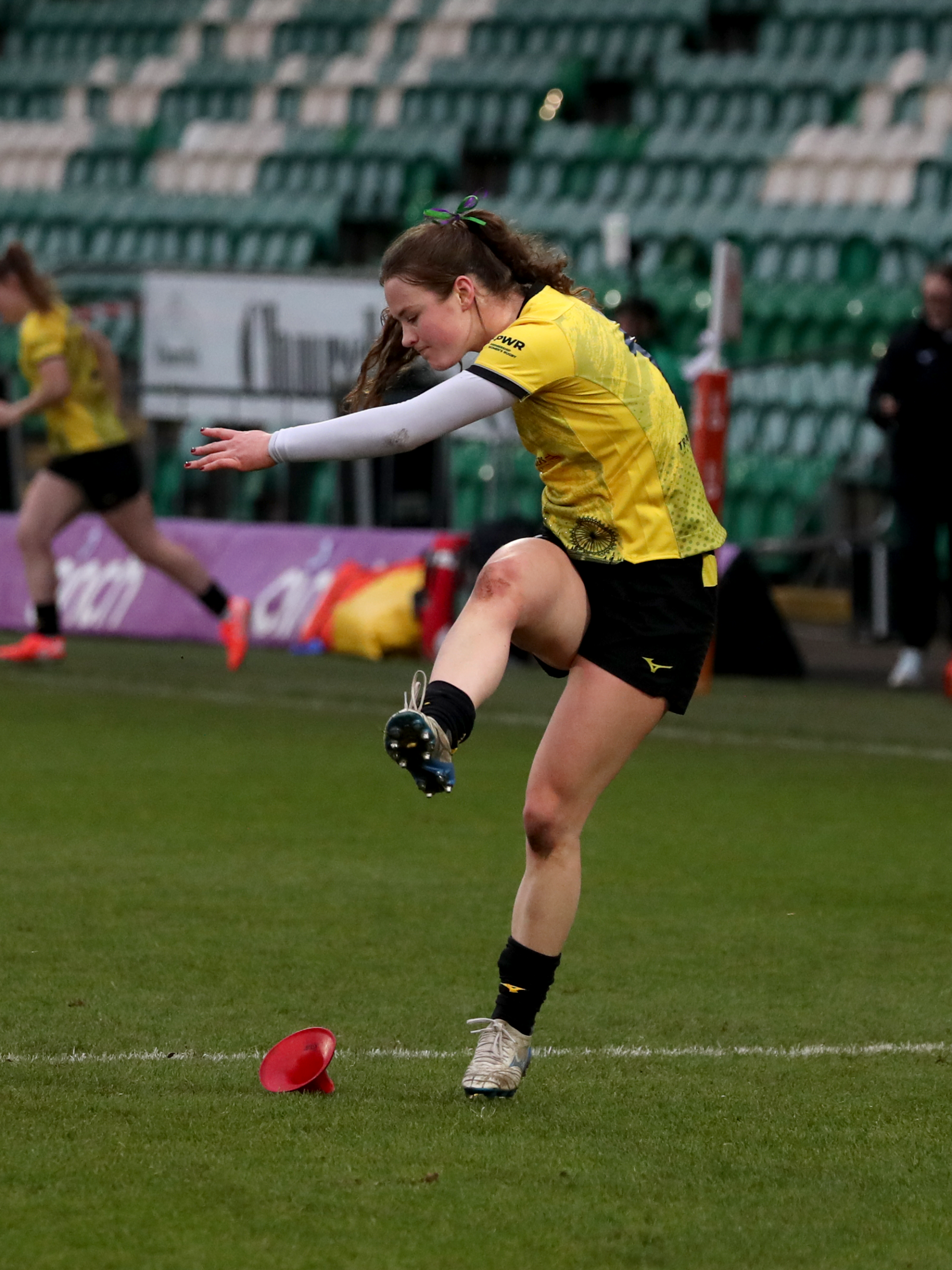
Utility back Rosie Inman discusses the mentality behind kicking and the upcoming London derby at Trailfinders Sports Club.

Inman has played a pivotal role in Trailfinders colours this season from the PWR Cup to the league.

Her stand-out performance against Loughborough Lightning helped Trailfinders secure a bonus-point score in the last game of 2025.

Inman offered her thoughts on the 2025/26 season so far.

‘I’m really enjoying it,’ she said.

‘We’re playing some fun rugby and I’d like to think we’re on an upward trajectory. It’s also been great to see the team gelling together since the start of the season.’

In Round Eight, Trailfinders Women faced Loughborough Lightning in the pre-Christmas fixture. Inman was crucial in the outcome of Round Eight after she slotted a levelling penalty and scored a bonus-point try for Trailfinders. She slotted three out of three conversions which proved pivotal in the outcome of that match where Trailfinders drew with the East Midlands side.

She spoke about what, if anything, goes through her mind when she’s lining up the ball on the kicking tee.

‘Well the worst one is when I’m right in front of the posts and I’ve got “don’t miss, don’t miss” going through my mind – but yes, I take a few breaths and then just go through the process exactly as if I was at the training ground.

‘It’s usually that the less I think about it the better the kick goes.

‘Scoring the bonus-point try was amazing. Honestly, I thought that was the game over so I felt thrilled and relieved. Unfortunately, that was a bit short-lived but it was still definitely a memorable moment.’
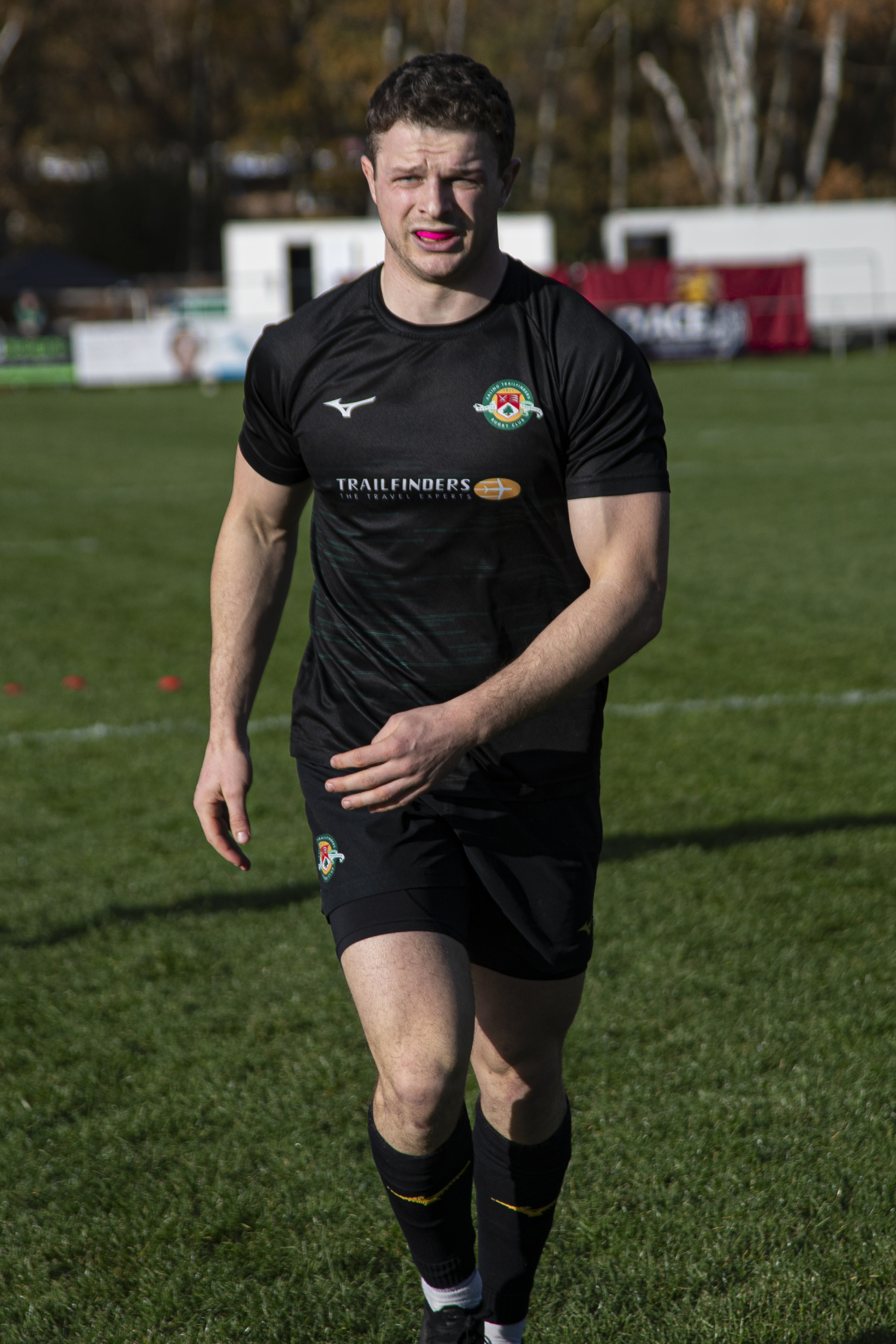
Next up at Trailfinders Sports Club is the London derby. Trailfinders Women host Harlequins in a battle to see who in the West is the best.

The London derby will be the first match in 2026 for Trailfinders Women. Inman discussed how the squad manages breaks in play during this time of the season.

‘We’ve had some time off which is rare and has been amazing and restful. But we’ve got a good few weeks of training now where we’ll lock back in, make some little fixes where we need to and just do the best we can to prepare for a big game.’
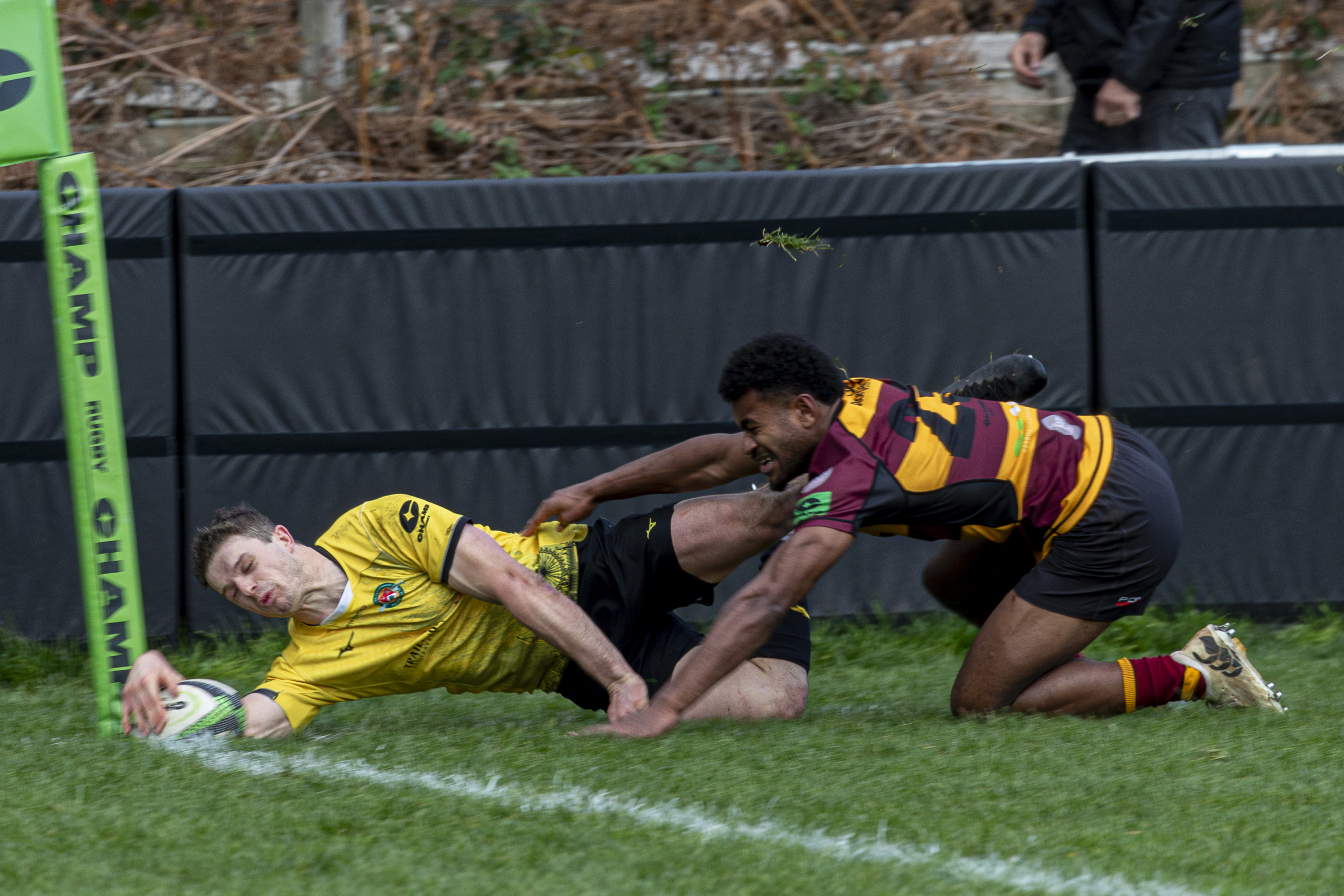
The most recent clash between Trailfinders and Harlequins was in the PWR Cup in September 2025. This is the first time the two teams will face each other in the league this season.

‘They’re a top four team so they will definitely come here wanting to show that,’ Inman offered on West London rivals Harlequins.

‘Reaching the top four is also something we’re striving for this year so we’re looking forward to the match and I hope that it’s an exciting, competitive match.’

Secure your tickets to the Friday Night Lights fixture between Trailfinders Women vs Harlequins.

Club Captain Angus Kernohan returns to the starting XV for Round 13 to face Worcester Warriors for the first time in the professional era. 

Kernohan returns to the field for the first time since facing Ampthill in Round Six.

With one of the most anticipated games of the season so far, Kernohan is glad to be back on the field for the Club’s first clash of 2026.

“I feel really excited ahead of the match,” he said. “We’ve had quite a long block of matches. Each game we have played has prepared us for this.

“This is our hardest challenge yet and one that I think a lot of eyes will be on so I’m super excited to be involved in it.

“We want to take to the field and implement what we’ve been doing in training and do our best.

“I think if we do our best then I think we’ll put ourselves in a really good spot to win the game.” 

Ealing Trailfinders have never played Worcester Warriors in the professional era. After the West Midlands club returned to professional play for the 2025/26 season, Round Thirteen is one of the most highly anticipated rounds in the league. Kernohan and the wider Trailfinders squad have looked forward to the top of the table clash.

“It’s really exciting to be playing Worcester who have returned to rugby this year. They’ve got a lot of hype around them. They have a lot of support around them and that’s come across in the great stadium they have. Because of that support, I think they have added more eyes onto the league overall and I think that Round 13 will be one of the most intense games of the season.

“People will be watching. Hopefully, it will be a good game and one we can get on the right side of.” 

Ealing Trailfinders have had their most successful run in the Champ in the Club’s history. Twelve consecutive wins in the 2025/26 season plus five wins from the end of the Championship winning 2024/25 season has led to this incredibly strong run of wins.

Kernohan emphasised the mentality that has resulted in this success.

“I think our biggest run in the Champ ever has come from our attitude of taking each game as it comes.

“It’s easy in this league to focus on certain games in the season, whether it was the long journey to Cornish Pirates between Christmas and New Year or the game this weekend. So it can be easy to take your eyes off the game that’s immediately in front of you. Any team in this league can beat you if you’re not concentrating.

“We’ve had a focus of taking each game as it comes. We have our own standard for each game and we hold ourselves accountable to that standard and that standard only.

“Our preparation for this game will be the same as any other game. We’ve got a game plan that the coaches have put in place and if we go out there and we execute it and focus on what we need to do, we’ll be in with a really good shout of winning this weekend.

“There are a few Worcester players who have previously played as part of our squad so it will be a really good opportunity to see them.

“Overall, I’m really excited for this game and one that’s great for the Champ. I’m delighted that I get to be a part of it.” 

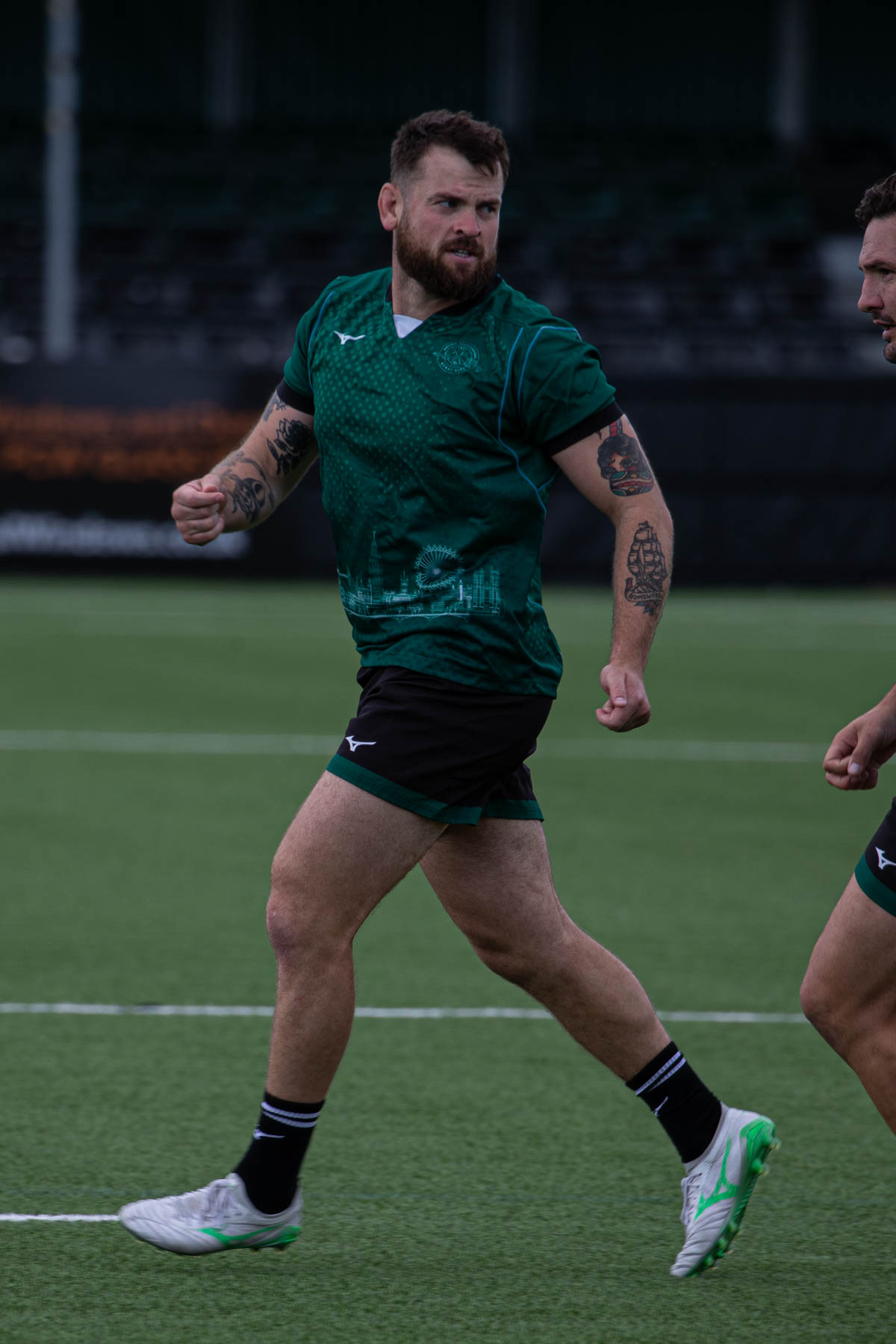
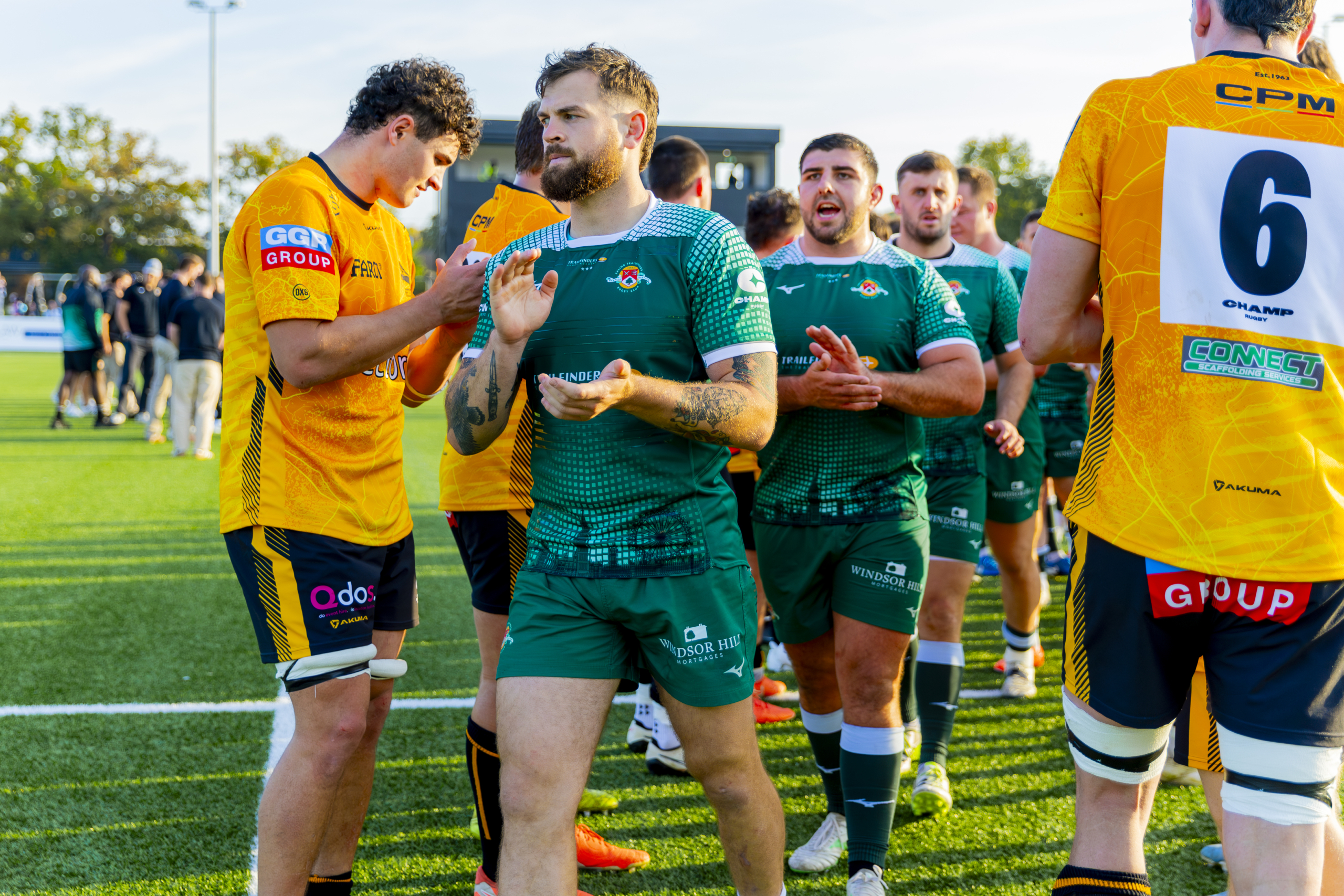
Conor Oliver discusses his recent leadership roles at Trailfinders, how rugby has evolved for the forwards, and loving golf 

Irish flanker Conor Oliver returns to the squad ahead of Round Four of the Champ. He has previously featured in Rounds One and Two for Ealing Trailfinders and got over the try line on both occasions. He will captain Trailfinders against Coventry this weekend.

Prior to playing in the Champ, Oliver played in the United Rugby Championship. He commented on the change of leagues.

“It’s been a really good start to the season. I was used to URC rugby for a long time but it’s quite similar coming here.

“I think the standard is really high as well as the standard of the team we have here as well. I think that our quality has shown with the number of points that we’ve scored this season. We’ve scored nearly 150 points across three games – it’s not bad going.”

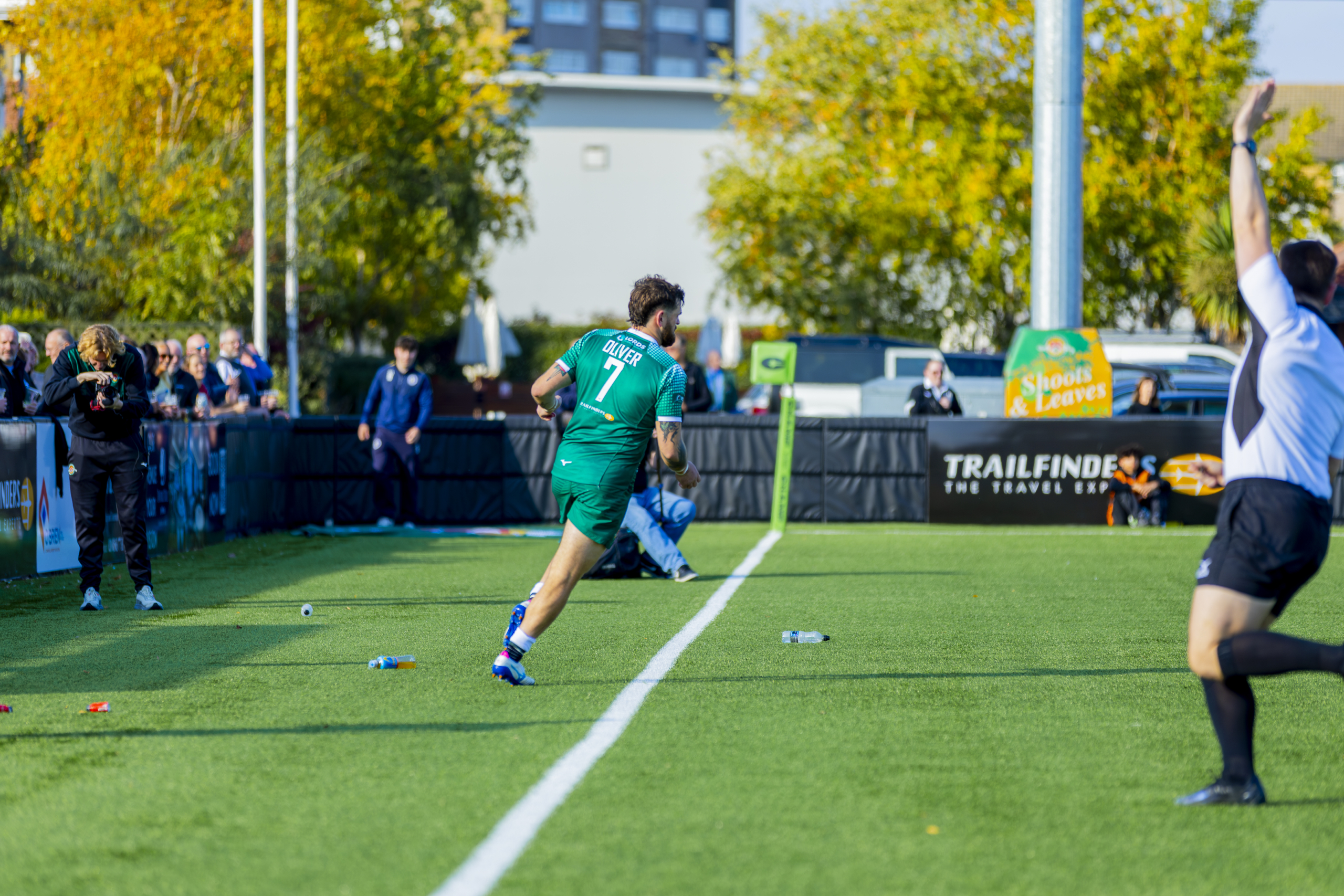
Oliver scored on debut against Bedford at Goldington Road. The following week on home soil, he scored in eight seconds from kick-off against Chinnor.

“We have a chat before kick-off,” he said. “We have our attack plans and know where to target an opposition’s weakness.

“Scoring on debut makes us look good. We’ve seen that with Deago and Patrick scoring on their debuts.

“A lot of these things are pre-planned but sometimes it’s just being in the right place. Tobi Wilson tapped the ball back to me after the kick-off from Chinnor and the gap was there.

“Against Bedford, I think we still left a lot of points out on the field and we let in a few soft tries. But we were delighted with a first round win. We want to put convincing performances out on the pitch.

“The attack at the Club is what really excites me.”

Oliver’s try against Chinnor is up there with one of the quickest scored in the league’s history. His football background from playing as a teenager has meant that the chip and chase that was on display in that eight second try was a characteristic that had always been part of his game.

“I think from playing Gaelic football and football back home, as many Irish guys do, the coordination is there from a young age.

“Rugby was probably the last sport I picked up when I was growing up.

“I was brought up playing football mostly because my family are really into it. I eventually came into rugby after doing Gaelic football and hurling.”

Whilst Oliver plays at flanker, he hadn’t always been in the forward pack.

“I used to play in the backs. I played centre and stuff until I was probably about 15, 16. That’s maybe why I fancy myself with a kick chase.

“I think many players find themselves starting in the back line and eventually move to the forwards, or are pushed into playing front or second row. But that hasn’t happened to me yet.”

Across international and club rugby, flankers are playing a more hybrid role across the field. Oliver commented on how he feels rugby has developed and changed in recent years.

“I think the game has evolved a lot. Players aren’t fenced in to one position anymore. You can see that with second rows coming into the back row, and back rows moving into centres if they need to.

“We’ve done some training with the backs and some of that has included being on the wing. That’s only occasionally but it’s good preparation in case we get yellow cards in a match. It’s good to have it in the locker.

“I do feel like it’s a completely different sport to play on the wing. I not going to say I’d never like to play there – it might save the pressure on my shoulders a bit.”

Having led Trailfinders in two rounds of the Champ, leadership is something that Oliver has come to enjoy.

“I’ve probably grown into the leadership role. I was at Connacht for five years and I learnt off many of the players there.

“I’ve learnt to lead by example rather than talk too much.

“Moving to Trailfinders, the leadership quality is something the Club have emphasised that they’ve wanted from me as a player and person. I didn’t want to come in talking too much but the longer I’ve been here, the more I feel that I can voice certain things.

“I said I’d give the leadership thing a crack, whatever position I hold. Hopefully we can translate our recent successes to this weekend against Coventry.”

Outside of rugby, Oliver joins many of the Trailfinders players as a keen golfer. Whilst this is no surprise given the beautiful courses his homeland of Ireland boasts, Oliver stressed that golf has been a good way for many of the players to bond outside of rugby.

“There are some great courses in Ireland, but the only thing to let us down is the weather can be quite tough. Make sure you go in the summertime for a golf holiday.

“Golf has definitely been an area where I’ve been able to bond with the lads, do stuff outside of rugby and not talk about rugby.

“A few of the boys are members of the West Middlesex golf club around the corner from Trailfinders Sports Club so we try to play at least once a week.

“I’d say that I’m a keen golfer but not necessarily a good one. But the mentality of the sport is something that really interests me.

“I enjoyed watching the Ryder Cup. I won’t say that Rory McIlroy is my favourite player as that’s an obvious favourite. After watching the Ryder Cup, I’d say that Shane Lowry and Brooks Koepka are my favourites at the moment.

“Both golf and boxing are sports that I enjoy. They have a top tier kind of mentality. I like to see how individual sports deal with stressful situations. I especially think it’s amazing in boxing given it’s a combat sport.”

Beyond the wealth of sport Oliver enjoys both personally and professionally, he is a dog dad to a seven-year-old Bulldog.

“He’s quite old for a Bulldog. Me and my girlfriend were worried that he wasn’t going to deal with the travel from Ireland to England well when we drove a van here and came on the ferry. But he slept for most of the journey.

“He’s just happy to be around us and go wherever we go.”

Our Sponsors